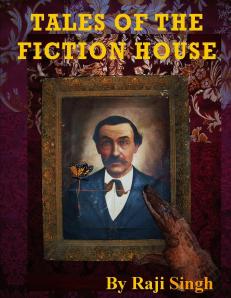
I Hear You, Mr. B!

I had the delightful experience of attending a writing conference this weekend.  I spent two days in Kansas City surrounded by people who love writing.

All weekend, I kept hearing Mr. Leonard Bishop resonating in my head.

Case in Point:  I rode the elevator with two writers.  One was frustrated because an editor had just acquired a book about World War II, the topic of the book she was pitching.  Another was distraught because the plot line of her manuscript, a journey of two creatures to save their world, was replicated in a just-released children’s book.  By the time we reached the third floor, out popped Leonard’s words from my mouth….”Yes, but the way YOU write it will be unique!  There are few plot lines in history, but a million ways to tell the story.”

Both were smiling by the time the doors closed.

That’s what I need whenever I hit a writing block.  A little bit of Leonard.

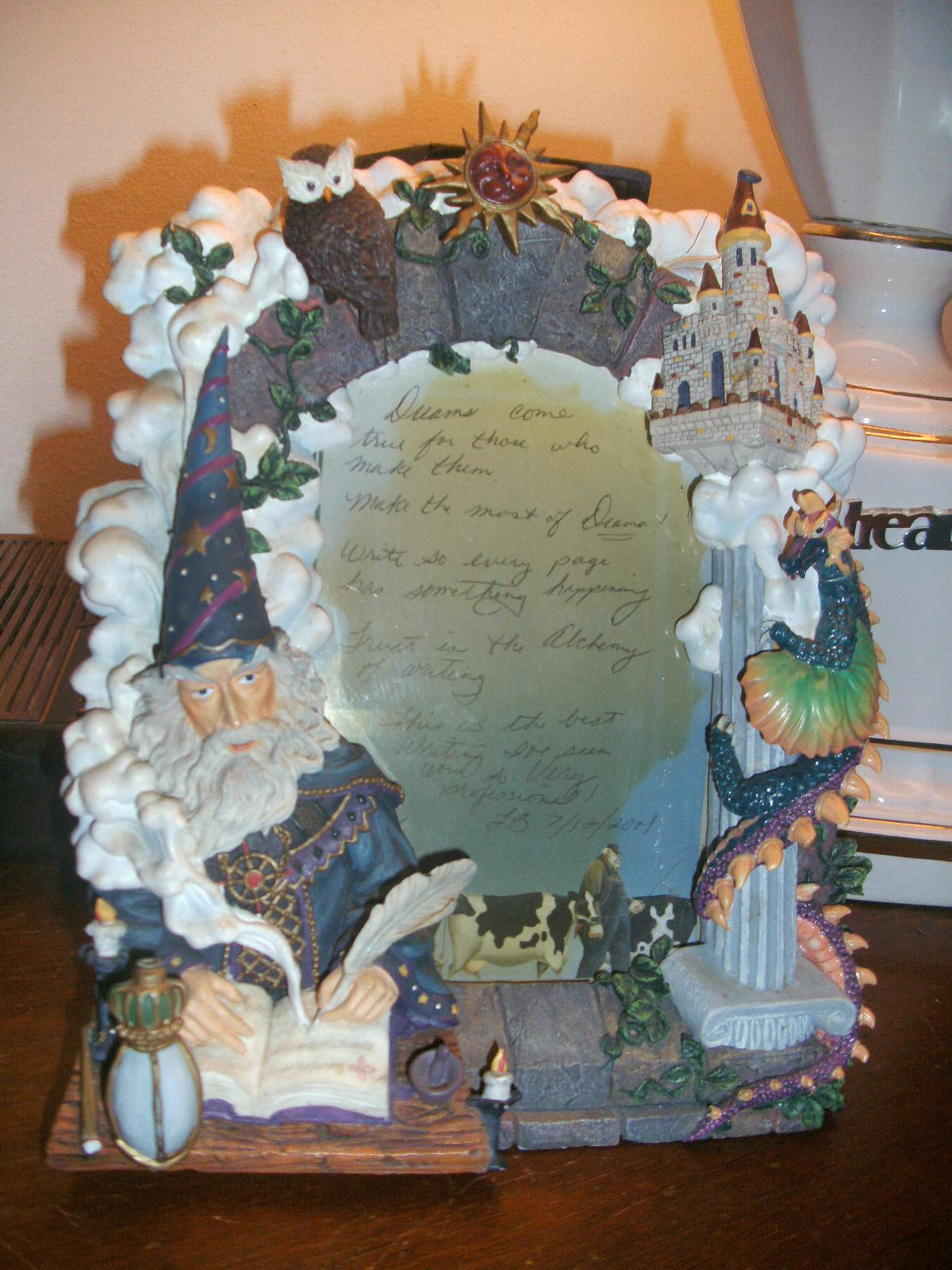
I push back from my desk, cross my arms, and ramble around in my mind…or my notes, looking for him.  On my desk, I have a goofy frame with quotes to keep me going:

“Dreams come true for those who make them.”

“Make the most of Drama!”

“Write so every page has something happening.”

“Trust in the alchemy of writing.”

And my personal favorite: “This is the best writing I’ve seen you do.  Very professional!” LB 7/12/2001

A decade later, I’m still reaching for that standard he set.   I know my journey won’t be the same…but there are a million ways to get there!

Thank you, Mr. B!


Posted in Leonard Bishop, Teaching, Writing | Tagged , , , , , , , , | 6 Comments

Our King: Eulogy for a Dog

By Joseph F. Hedge

Our Dad, Writer and Dreamer

(Our father, Joseph Hedge, defied the 1950’s stereotype of the stern, unfeeling father.   I remember him reading this story based on his favorite dog to us decades ago.  Of course, we cried our eyes out, but somehow, when we lost pets after that, we always knew he was grieving with us. )

The sun is so warm, I am going to sit here all day and wait.  Wait for my dog King to come back.  Daddy said that he is sick and probably just went away to die.  It is so strange that King isn’t here.

I hear Mom call, “Marie!”

I think I will let her call all day until she gets tired.  I have always liked sitting under this oleander bush.  It’s cool, out of the hot sun.  Maybe they will think that I also ran off to die, just like King.  How do they know? Do they really care or will it be easier to just take his dish and move it out of sight?

When I called my friend Carrie last night, it seemed that her phone would ring off the hook.  Then she picked it up.  We talked for such a long time, about dogs, cats, pet birds, and back to my King.  Carrie and I would walk King for blocks.  He always seemed to be smiling and wagging his tail.  All I ever did was love King.  Never tried to train him.  Loving is what he knew best.

Last night seemed to be the worst night of all.   The shock of King being gone for almost a week.  I guess everyone was right.  In the darkness of my room, I wished for King to come back.  I heard a rustle outside and turned on the light.  Nothing was there.  The noise was the fan in my room.

So today I will just sit here and let everyone search for me.

“Marie! Marie!” Mom is still calling.

I hope she misses me.  When Carrie comes over, she will know where I am.  Carrie has been here before.  We have had picnics here; lunches packed at home, carried twenty feet to our favorite spot.

“Marie…” It’s Carrie.  “Let’s go look for King.  Maybe he is down by the tracks.”

Well, Carrie is trying to make me feel better. I thank her for that.  “You know what, Carrie?  Let’s you and I just start looking in all the places we have taken King on our walks.  I’ll bet he is still somewhere. “

We get up from our hiding spot and I yell at Mom, “Be back in a little while.”

She answers, “Don’t be long.  It will soon be dark.”

My “OK” is in passing by the kitchen door.  I really don’t care if it gets dark.  King is out there somewhere.

Carrie and I see a pack of dogs running in the park.  No, not a pretty white King in the lot.  I sit on a bench for a while, and sadness comes to me again.  Carrie pokes me and we begin our search again.  Finally, I am too tired to keep going.  I look at Carrie.  We agree.  Going back home sounds like a good idea.

“Bye, Carrie! Thanks!”  Carrie is really my best friend and only best friends know how it feels to be sad.

Gosh, I did stay out a long time.  The lights are on in the kitchen and it looks warm.

“Hi, Mom! I’m home!”  That seems to be enough to announce my arrival.  I start to the front room and see Dad sitting in the den.  Just thinking, I guess.  The television is off and he seems as lonely as I feel.  He is turning in my direction.  I try to move away quickly.

“Marie, Can I talk to you?” He has never asked my permission before.

I sit on the footstool in front of him.  I wonder, What will this be about?

“Marie, we have to talk about King.”

Somehow, at this moment, I feel it is okay to talk about him.

Dad said, “When dogs get older, they seem to know that it is time they move on, to where I don’t know, but when they leave they break many a heart.”  Dad seems to be very slow and patient in the way he is talking to me.  He is looking straight at me and has the kindest, softest look on his face.

“You, Marie, have had King since you were a baby. He’s always been around whenever you’ve needed someone to pet.”

I almost wish he wouldn’t go on, but it feels good to find out that someone besides me misses King.

“Now, My Dear, you just have to keep King in a loving spot in your heart.”  He has never hugged me so hard or so long before.  It hurts a little, but good.  “Marie,” he says, “We do know how you feel, and we love you…and we loved King.”

Lying here on my bed tonight, I have nice thoughts about King. I wish he were here on top of my bed with me.  He never did like to lie on the rug beside my bed.  I pick up the rug.  I think I can feel the warmth of King.  It won’t hurt to have it next to me tonight.

Good night, My King.

© Joseph Hedge, 2012

Posted in Dogs, Nostalgia, Slice of life, Writing | Tagged , , , , , , , | 5 Comments

Outlines: Mapquest for novelists, or soul-killing, oxygen-sucking waste of time?

A friend of mine told me she was getting frustrated with her writing class and wasn’t sure she was going to stay with it. Students were told to outline the whole book before the instructor let them start, and he’d just rejected her fourth outline. She was itching to begin chapter one. She wasn’t alone; most students in the class had submitted multiple outlines that hadn’t measured up.

I couldn’t help but think of what my old writing instructor, Leonard Bishop, would have thought of this idea…

Here’s one clue, from notes I took in his class on October 17, 1977: “When you write every day, you bring forward content that you didn’t realize existed. Outlines don’t work very well because they don’t allow material to come forward. Writing begets writing. Don’t think it through; write it through.”

It got me to thinking of outlines, and just why they don’t work very well.

I do understand their immediate appeal — it’s tempting to think they would be a good idea when you think of how intricate and highly organized the final product is likely to be. If I just wander off without an outline, won’t I get lost, or end up in a cul de sac somewhere? Will the story make any sense? Won’t it become chaotic?

The problem is outlines don’t account for the way the human imagination works. There’s something decidedly organic about the way a story evolves. If writing a succession of scenes were like connecting boxcars, then an outline might speed the process up. But the reality is that a novel grows more like a tree.

You start with a seed. This could be whatever it was that goaded you to think of writing a novel in the first place — a person or persons you feel compelled to write about, mingled in with some sense of a formidable problem they’ll encounter. The chronology is a mystery, as are most of the supporting characters. You toss your seed into a fertile patch. In a way, you’re helpless now; all you can do is water it by showing up at the writing desk every day — and writing scenes. Just as you can’t predict every twist, every curve, of every twig and branch of your tree by examining the seed, so you shouldn’t expect to be able to produce a fixed and unchanging order of scenes from your core idea. Your tree just grows, putting out a branch here, shooting a twig out there, obeying its own enigmatic tree-logic.

This is because scenes are experiments. Most will fail. It’s impossible to know which scenes will “work” until you write them out fully.

Another way to look at it is that an outline can contain no more than the contents of your unconscious mind during one, or very few, writing sessions. By contrast, letting scenes grow out of scenes over a period of years allows a much richer, more layered story to evolve — one that will allow in more of the crazy unpredictability of life, and possibly send the plot off in unimagined directions.

Once when a student who hadn’t yet finished his first draft yet asked Leonard Bishop about outlines, he gave that student an answer that, back then, I thought was a snarky dismissal of the question — “The best time to do an outline is after you’ve written the book.” But now I think I get it. When the first draft is complete, the book has an ending. You know where you’re going now. Outlining at this phase gives you a firmer hold on the succession of scenes, helping you foreshadow what’s to come when you write the second draft.

But what about getting hopelessly lost? If you keep bringing forward material from previous chapters, you won’t. The early chapters are the trunk of the tree. I read somewhere that Hemingway reread his entire manuscript from the beginning before he started a day’s work. (It’s also said this is why his books were short.) I suspect he was going back to reconnect with the trunk.

And my friend in that class? She quit after the instructor praised her outline and told her to begin, then reversed himself later in the class when, during an open discussion, a student found yet another flaw. And then she went home, typed “Chapter One” at the top of the page and wrote her book.

Posted in Uncategorized | Tagged , , , , , | 20 Comments

YOUR ‘VOICE’ IN WRITING

By Raji Singh (editor, archivist, archeo-apologist, Fiction House Publishing)

Our Founder, James Thaddeus ‘Blackjack’ Fiction


Psychologists will tell you “ignore those eerie, Halloween-ish voices that try to creep through your ears and into your brain.”  A writing instructor will tell you “listen for the written ‘voice’ that is in the book of the good writer you are reading.”  The act of doing so will help you find your writer’s ‘voice’ if you haven’t already.

It’s great to find, and continually hone your writing voice, but don’t be afraid to vary it.  Voice can serve so many purposes.  Whether you’re e-mailing a letter, writing a technical report, short story, novel, screenplay, poem – even a note in a bottle to a hoped-for reader on another continent – using a varied voice can make your subject more dramatic, colorful, precise, cryptic, just about whatever you want it to be to make it more interesting.

Everyone loves something of interest.  Therefore, readership for you.

What is voice?  The unique sound of an author.  The writer’s use of voice makes the subject enjoyable, and vivid.

Help establish your voice by how you describe your unique vision.  Utilize the five senses – touch, sight, hearing, taste, smell.  Ask yourself, who is my audience?  Write with them in mind, but don’t pander to them.

Voice defined via example:

The narrator in To Kill a Mockingbird:  She reveals human emotions through a quiet, understanding voice.

The young man storyteller of Zorba the Greek.  He seeks personal discovery through an objective voice that lays bear his foibles.

Newspaper columns offer excellent examples.

Anna Quindlen’s consistent voice – its constant questioning of relationships and their complicated layering delves into the impermanence of life, and the importance of being part of life at every moment.

Even the sometimes crabby Abby’s voice – a mix of stern-kind.  She succeeds with her readers who seek self-improvement.  For others, she’s just plain interesting.

A thing all these writers have in common:  A strong voice that they’re astute at varying so a reader hardly, or if ever, notices.  This makes them interesting to read.  And that’s a cardinal rule of all writing.  BE INTERESTING.

As I’m discovering more and more about the over a century of writers at Fiction House Publishing, I’m realizing what makes the Founder’s, ‘Blackjack’ Fiction’s chief writer, his notoriously eccentric half-brother William ‘Golden Boy’ Golden (sometimes Willamina) by far the most successful.

Golden Boy embraces the use of various voices.  Using one voice, he could write with the flow of Flaubert.  Another he entertains with the panache of Cyrano.  He changes styles almost instantly, in narrative and in dialogue, creating ‘mood’ he desires.  He makes it quickly discernible to the reader, so to make his audience always-anxious participants in the story.

At one point, he’ll be the deep-voiced macho Mickey Spillane-Ernest Hemingway narrator.

Another, he switches, from first person Golden to second person Willamina, to castigate testosterone egos of men.  Then he’ll utilize Willamina’s chameleon dialogue to add humor to the situation.

For Golden Boy, William-Willamina humorous examples of how to utilize voice, or just for some entertaining laughs, see today’s, October 7, 2012, Tales of the Fiction House website posting entitled ARCHIVING THE FICTION HOUSE – WILLAMINA’S SHADY SUITORS.

©Raji Singh 2012

Posted in historical fiction, Humor, Satire, Writing | Tagged , , , , , , , , , , | Leave a comment

Family Drama…Without the Drama: Writing a Family Play

By Catherine Hedge.

The adventure began simply.  My Uncle Bill called and asked, “What do you think about us putting together a simple little skit for the family reunion?”

Even while I was answering, “Yes! That sounds like fun…”, my stomach was churning.  In my family, nothing is ever done simply.  I could hear my grandfather’s voice in the background, “Do everything to the very best of your ability and you will never be ashamed.”  It was going to be a lot of work.

What I didn’t know was that I would learn so much.  Of course, I discovered more about my family, of the dreams and passions of my grandparents and their children, including my mother.  Since we had the fourth generation performing the parts, I had real conversations with my cousins’ adult children and second cousins.  They had seemed pleasant before at the last reunion, but they were busy watching stars with the other teens while I drank wine with my aunts and uncles.  I learned that they, like our patriarch, were inquisitive, lively adventurers.  Grampa Borel would have been proud!

What I didn’t anticipate is that I would learn so much about writing.  Writing fiction is somewhat safe.  You do delve into your personal emotions to invent the responses of the characters. You can also take the drama in your knowledge and experiences to use as working matter.  You pull it out and away from yourself like a glob of putty.  Then you stretch it, compress, explode, reform to make something entirely new…and unidentifiable as your own.  That’s safe.

But when you are trying to pass on your family history, there are so many ways you can fail.  Inaccuracy, tedium… going for maudlin emotions or the cheap laugh…  I was terrified!  Over several months, my uncle and I wrote drafts and responses, dug out old memories, old jokes, and old pain.  Some of my relatives we lost tragically too young.  Their children or grandchildren were still small.  Others had died only months before and their loss was keen.  How could we navigate the emotions while staying true to history and still provide a touching, enjoyable moment for our family?

I’d like to share the revelations that came to us in this process.  Just as every family is unique, I’m sure you will discover your own writing experience if you ever get “roped” into this.  But maybe these pointers will help!!

Know your purpose.  Why are you presenting this in the first place? This will narrow your scope to make it doable.  Otherwise, you’re trying to explain a hundred or more years! This isn’t Gone with The Wind, but a glimpse into small moments of history…that are big to your family.  Our purpose was to introduce our founders to the youngest members and to honor the wisdom-keepers of our family, both living and gone.

Pick your time carefully!  There are so many dramatic times in a family’s life…weddings, births, funerals…but someone is always coming or going, and the dynamics will rest with that event.  We decided to pick a festive but recurring time…Christmas Eve dinner.  We needed a reason to gather everyone together.  What better reason than a meal?

Pace:  At first, we thought our actors could simply stand and tell their story.  But my grandfather and grandmother had seven children.  That’s nine stories!  The pace would be deadly if each one stood and talked for three minutes.  Short speeches, 30 minutes at least! Yawn.  Instead, we had characters enter the dining room, move about, interact within the play, and had one tag-along brother annoying the other.  I think the final play was about 15 minutes or less.  (I was too involved to time it!)

Action:  We kept the action very simple.  No big fights.  No pratfalls.  No high drama.  Our purpose was sharing history.  Not entertainment.  Still, we didn’t want it to be boring.  We had to have movement.

Preparation:  Two words:  READER’S THEATER.  This worked for us because we have a fairly gregarious nature.  My uncle and I knew that there would likely be no time to practice.  (Too much star-watching and wine tasting going on!)  For the most part, by pressuring my cousins, brother, and son, we were able to nail down our actors ahead of time.  Swearing them to secrecy, the actors received the play in advance to read through…not memorize.  Each copy of the play was highlighted so the players knew their lines and the places for “General Chatter”.   We set up a deck with a picnic table and a few extra chairs.  No props except my apron.  (Grandma always wore an apron.)  (We didn’t have one part filled until right before “curtain”, but she played her grandpa perfectly!)

Humor:  If you want hilarity, hire a clown or a bad juggler.  Taking old family jokes, mugging, and fawning for the cheap laugh can cause serious, long-lasting harm.  Each of us have those ancient memories, the teasing of a younger sister when you have your first pimple, the reputation for being the messy one in the family, or the one who had to repeat kindergarten.  They weren’t funny at the time and they aren’t funny now, just because you’re sixty.  We did have some humor, but it was using a soft touch about relationships that have always had those elements, characteristics that seemed the essence.  (For example, the hero worship of Bill for his older brother, the one Grandma always liked best.)

Tightness:  There is so much we could have said about each member of our original family.  They led active, loving, complicated lives.  Probably the hardest part of the whole process was to take all that information and pull out a few lines that encapsulated a person.  It was much like writing poetry.  The sentences were fragmented, excess words deleted, and the other characters had to respond to what they said.  Just like in dramatic dialogue.  (Not like real dialogue where we wander all over the place and interrupt each other!)

Impact:  How in the world can you end this in a way that seems natural?  We were having a meal.  Should they just stop and say, “Let’s eat?” Blah.  Or something corny like Santa comes in with candy canes? (You’ve just spoiled the whole point!)  How can you have pathos at the end that isn’t too much so everyone out in the audience is depressed for the rest of the evening.  (Neither wine nor stars are fun that way!)

So, we made the decision to turn to song and to draw in the whole group.  Music has been a strong bond in our family.  It seemed a natural for us.  Sure, we had lots of tears, but there were smiles, too.  And hands being held.  And hugs.

When I walked away from the stage and took off my apron, I was surrounded by love.  Hugged by my co-author, Uncle Bill, my sniffling mom, my crying sister, and my dozens of cousins, I was dazed.  Somewhere, near the part where my godmother, my Auntie Ann entered the scene, I caught my breath and stared around the stage.

I could feel him, standing somewhere nearby.  Though he’s been gone forty-seven years, I know Grampa Borel was there.  I hope he liked what he saw.

*******

I’ve attached our final play for the benefit of my relatives, most of whom have never read our script.

Thank you, Uncle Bill!  It was wonderful working with you.  I love you all!  Cathy

*******

Legends and Legacies: The Borel Clan

By Bill Borel and Cathy Hedge

Bill Borel: Hello everyone. Cathy and I have written a family history play and it takes a little imagination. The setting could be a house anywhere, but for this play, the house is in Arcata. The date, well it isn’t important, it is a play after all. But the play is loosely based on a period in the late 1950’s to early 1960’s. The play is not actual history, but Cathy and I hope it reflects who the original Borels were and what it was like for them, and for me,

Of course the setting is in the kitchen and dining room. And it has to be at Christmas. After Midnight Mass.  The hour is a little after 1 in the morning. Arnold stays home from Mass to start the meal.  He’s cutting the Montana Slab Bacon.  A huge bowl of sourdough pancake batter bubbles beside him.   A starter batter sits in the Armour refrigerator for the next time.

(Arnold is alone on the stage right pantomiming cutting bacon or mixing pancakes)

(All except Ann file in from stage left and walk on the back side of the table.)

Bill Borel:  The first to enter is Mother Borel, (She says, “Merry Christmas!”

Followed by Mary (Merry Christmas!)  Joan, (Merry Christmas!)  and Gene (Merry Christmas!)  Anne, we’ll see soon.  Then come those whom Mother called, “Those last three” May, (Merry Christmas!)   Johnny “Merry Christmas, when do we open presents?”and Billy “Merry Christmas!

Mother Borel stands at end of table stage left.  Others sit down in order except Johnny and Billy.  They walk around to other side.   Billy is one step behind Johnny.

Johnny: Stop Following me!

Billy: I’m not following you  (He still follows.)

(Johnny helps Mother Borel sit at the end of the table.)

Mother Borel: Thank you, Johnny! It just wouldn’t seem like Christmas without you here!

(The rest of the table groans.)

Mother Borel: Billy and Johnny, you set the table.

May:  You ask them to do to much, Mom

Joan:  (Jumps up) I’ll do it, Mother.

Mother Borel: Anne? Where’s Anne?  Mary, (Fairly authoritative) Get the juice please.

Mary: I’ll start the coffee!  A little defiantly.

Joan: Need any help out there, Dad?

Arnold: (General clanking) Thank you. It’s under control. First batch nearly done!

Gene: Don’t forget to take out the starter!

(General laughter)

(Johnny sits down at the table.  Billy sits right beside him.) Stop Following me!

Bill:  I’m not following you! (He scoots closer to Johnny and they elbow each other)

Mother Borel: Billy, leave Johnny alone!  Mary, pass the napkins, please.  Anne? Where are you?

Mary:  Here’s the syrup, Mother.

Arnold: (Calls out of the kitchen) Somebody get Major out of the kitchen! He’s trying to eat the butter!

Billy: Yeah, let him outside so he can go pick a fight with a boxer!

Johnny: Are the kids all asleep?

Mary: Yes, Joe and Mark took care of that.

Gene: Anyone want more eggnog?

Auntie Joan: Joe and Mark took care of that, too!

(General laughter)

Mother Borel:  Ann? Where are you? You’re going to miss breakfast.

Ann: (Pokes her head in)  Sorry, Mom.  I was reading about the environmental impact of the deforestation of the Amazon Forests.

All: That’s our Ann!

(Ann sits down wherever there is space.  We’re crowded together)

Mother Borel: (Waxes poetic) Oh my! I’m so happy with all of you here! It’s been so long!

(All say things like)  We love you, Mom. Glad to be here!

Arnold: (standing by the door, smiling. He has a heaping plate of pancakes and they are passed around. ) Yes, it is beautiful to have you all together! I wonder, though…

Mary: What Dad. I’ve seen that faraway look on you before! You ready to go off to Venezula, panning for gold again? Take me with you!

Ann: No, Me! I want to go this time!

May:  (chirps) How about we all go? I want to see Venezuela someday!

Arnold:  (Laughs) I know you’ll all have your adventures soon enough! But I was just wondering…What would we see if we could time travel 10, 20, Maybe 50 years from this night? Who would you be? What legacy would you leave behind? What do you wish you knew now that you’ll know then?

Gene:  (Interrupts) Like if Emily will ever marry me?

Johnny: Or if Afghanistan will survive

Joan: Or if I’ll have a boy or a girl?

Billy: Or if Kathleen McCarroll will go with me to the spring dance?

Mary: Quiet! I think it’s a great question! Think about it! Maybe in 50 years we’ll have colonies on Mars!

Arnold: Yes, I’m sure the world will be very different. But my world is here, right now, with you. I’ve been writing about it in my journal, this elusive life we have. In fact I wrote an important poem titled “The Power” about that.

Mother Borel: Well, my legacy is right here! My beautiful babies and your babies!

Johnny: Thank you, Mom…but what else do you want us to tell the future about you?

Mother Borel (rocks in her chair a bit, and then stands):    Well, My goodness.  I guess they should know I was born Mary Catherine Kirby in Marysville, a mining town in the mountains of Montana.  I had to walk miles in the snow just to go to school.

Mary:  We’ve heard that before.  Uphill both ways!

Joan: In minus ten temperature

Ann: With no shoes

Mary: And you were only six years old

(General laughter)

Mother Borel:  No, it’s true!  Marysville is a registered ghost town now.  My twin, John, and I were the twelfth and thirteenth children of Irish immigrants. My father was the town blacksmith, a tough but good man.  He invented spurs that Teddy Roosevelt used with his Rough Riders.  The patent papers are around her somewhere.

I was only thirteen when I went to live with the nuns in Helena, Montana.   They trained me to be a nurse.  They were so kind to me! Then I met Arnold at a dance and married him.  One of my fondest memories is our wonderful summer honeymoon in a tent near Leavenworth, Washington.

I’ve told you those stories so many times,   but I’m proudest of my home, yes. I’ve always made a home for my family. And I’m a good nurse. My patients always told me how gentle I am, and a good listener, too. I guess someday I’d like to give that comfort again. But in fifty years? Well, I want to be in heaven then. I’ll be with my Jesus and Singing with the angels! (She starts a few notes of “When Irish Eyes are Smiling”)

General: Everyone starts to join in.  Sings one verse.  (All applaud at the end)

Arnold:  That you will, Mary, and they’ll sing all the prettier for it!  (He helps her to sit down)

Mother Borel:  (Blushes) Oh, Arnold

Arnold: (He is still standing):  Mother says it often, that you will all find love, family, perhaps children because you are loving, exciting individuals.  But besides that, what will you give this world…Just you?  How will they remember you?

Billy stands up:  I guess I’m just getting started, but I still know what I want.  I want to go to college, to learn as much as I can hold!  I don’t care if I go hungry or live on beans.  There’s a whole world out there I know too little about.  I want to go to Alaska and on adventures, to ski down mountains into my seventies, to play soccer until I’m 64, to sail on bright blue bays, beat Joe and Mark at golf, and settle down with a great family between mountains and the sea.  I want to run my own business and know that people count on me to make things happen.  And that I’m a good man.

Everyone looks around, surprised that they little brother is so mature.

Johnny pipes up:  I forgot you were here! (Laughs) Well said, Little Brother!  (He pats Billy on the back)

Auntie May (stands)… How will they remember me? For my love of adventure? My little red MG?  I know I’m bubbly, easy to get along with, but I can be pretty stubborn when I know I’m right

Johnny and Joan together:  That’s for sure!

May:  But I’m also a really great teacher either inside or outside the classroom.  I believe I make life happier around me…or at least try my best to make it so.  And I can throw a party where every single person feels as if she or he is the most important guest there.  That’s what I want my home to be like…

Joan:  But we thought you’d just keep travelling.

May: No, I’ll be ready to settle down when I find the right man. And I’ll know when that is. (She smiles and sits.)

Johnny: (Stands): For me, there’s too much happening to settle down.  Yessir, I want to change the world first!  I want to be a Journalist. Maybe even an editor with the Arcata Union.  I want to travel, serve with Kennedy’s new Peace Corps.  To go to some God forsaken land where the little man doesn’t seem to have a chance.  I hope to become a great cross country skier and lead groups through Norway and the Adirondacks. Someday, I’ll marry someone to travel with, who will be my best friend, and paint, and write. and…

Billy: (Pokes him) Give someone else a chance.  (Johnny sits and he and Billy elbow again)

Mother Borel:  Leave Johnny alone, Billy!

Gene: (Stands)…Me?  I want to Drive! Drive! Drive! I’m happiest trucking logs down paths you wouldn’t take a bicycle and I’ve never lost a load.  I want my people to remember me as a great storyteller and a man with a curious mind and big heart. That I could teach my brother in law algebra when his college professors couldn’t.  That I’m a good mechanic, can fix anything! Yea, I’ll have had my adventures, too.  A Stint with the Service in Okinawa late night poker games with my pals, but, I really want a family ready to welcome me home and hear my stories. Nothing better than that!

I’ll want them to think of me as the Great Trucker in the sky, carting that sun round the world, my elbow hanging out the window, and a good strong thermos of coffee on the seat.

(He sits and elbows Joan.  She stands shyly.)

Gene: Speak up!

Joan: Well, I’m a really good telephone operator, fast, efficient.  But now I want to run a good home, have healthy children, and make Mark laugh.  I make fantastic oatmeal cookies and bread and butter pickles that melt in your mouth.  I’ll can any vegetable or prepare any wild beast you bring to me, Elk, deer, the works!  I can sing “Do you want to swing on a star” as sweet as Perry Como…but what I really want to do is travel! See the pyramids! Golf in Scotland! See the great canyons and….

Gene:  You? Aren’t you confusing yourself with May?

General laughter.

She sits down, smiling, and Gene puts his arm around her and hugs her.

Ann has her nose in the book.

Mary:  Anne, put your book down.  It’s your turn!

Ann:  Uh, Sorry!  But it’s so interesting!!  I guess I want to travel, to keep learning, and to give back…I’m proud to be a nurse, a healer. As an Air Force nurse who went to Japan right after World War II.   I want them to remember me as a patient woman with a curious mind and as a good mother. I am concerned about the environment and I want to serve,   I’d like to do social work nursing, maybe at Baker Lake in Canada or even in India where the people have nothing.   We have so much and so many have so little.  Oh…and I guess my secret passion is to beat Mary at Scrabble!  (She sits)

All:  That’s not going to happen!  (Laughter.)

Mary: (Stands) When I was little, Daddy always told me, “Don’t let anyone tell you you can’t do something because you’re a girl.  You can be the best!”

Arnold: You’re right!

Mary:  Thanks, Daddy! Well, I’ve tried hard to reach those goals he set for me, the firstborn.  Nursing wasn’t my first choice.  I wanted to be an actress…that’s why I played a melodrama heroine in the community play.  I was just about to give birth to one of the kids and it took two men to pick me up off the railroad track!

(General Laughter)  But I’ve never regretted Mother sending Ann and me to nursing school.  I’ve a good mind and I’m a great nurse.  When I’m the night supervisor, people hop to make sure what I say happens…happens!

All:  I believe that!

Mary:  But what I really want to do is to learn to fly! Just the birds and me, following the sun above the fog…To go to Italy, Ireland…Everywhere…and to be with Joe to watch our children become whoever they want to be.   What a grand adventure that will be!

Mother Borel, Oh, that is just so beautiful, Children! But what about you, Arnold?

All:  (General chatter) Yes, Dad! How about you?

Arnold:  When you’ve lived as long as I have, it’s hard to nail down!  I was born in Pennsylvania in the late 1800’s., only 30 years after the Civil War. I served in France in World War One as second lieutenant in the Army Corps of Engineers.  What I didn’t tell you was that once I went to visit my cousins in Switzerland. They smuggled me in and out.

All: Dad!!

Arnold:  But After that, I became so interested in engineering and science I graduated from The School of Mines in Butte Mt.   You can find me there in the Hall of Fame.  I was a league all star in football for the Miners.     I played fair, but newspapers from out of town called me “Dirty Elmo Borel” when we beat their teams.  Thankfully, Butte brought me and Mother together.  I immediately knew I would marry her and raise a family. I just didn’t know how big of a family.

Billy:  Just seven kids before you got it perfect! (Johnny lightly pushes Billy, Billy pushes back,)

Mother Borel: Billy leave Johnny alone!

Arnold:  But besides you, what do I leave behind? My writing, my love of science?  I imagine sharing my pressed flower collection with my granddaughter and my gold dust with a grandson, and hope to see them grown.  I want the dreams of the working man come true at last and to know I played a part in making it happen.  I want the future to know I built the Grand Coulee Dam, gave up wealth for what I believed was right, but mostly, that I passed on all I knew and loved to my children.

Mother Borel (sighs): Fifty years from now, do you think anyone will remember us?

Arnold: (Walks behind her and puts his hand on her shoulder) I’m sure they will. As long as we can write and tell stories, we’ll live forever!  So I’d like to propose a toast, To my beautiful family. To our loves, To our legacies! A Very Merry Christmas!

All: (Raise imaginary glasses) To our Legacies! To Family! Merry Christmas!

May:  Hey, Mother, let’s sing some Christmas Carols!

(Mary goes to the imaginary piano and everyone bur Arnold and Mother Borel gets up and gathers around.)

Mother Borel: (Stays by the table) Wait. There’s something wrong, something missing.

Arnold:  I  know what it is. (All the actors turn toward him.  Grandma stands beside him. He puts his arm around her shoulder.   He turns to the audience, spreads his arms) It’s all of you. You are the reason for our being. Everything we said about ourselves would be meaningless if we had never married you, given birth to you, and loved you with our whole being. You have always been our purpose.

All:  You Make our lives complete.

Mary Hedge (for real). And since it is Christmas in June, please join us in singing Silent Night.

(Actors join hands at front and sing.  Bow at the end.)

Posted in Humor, Nostalgia, Slice of life, Writing | Tagged , , , , , , , , , , , , | 8 Comments

WRITING ADVICE

By Raji Singh, (My name is Raji Singh, although I am truly a Fiction.)

“Try to write most everyday- to stay in close mental proximity to your stories and characters.  Vast inroads into your work will be the result.”  J. T. ‘Blackjack’ Fiction, from, There’s a Story Born Every Minute, 1889

So many of your story ideas don’t need to be written as a novel.  In this fledgling era of e-books, any length work can become a bestseller.   So much of what’s out there as novel should rightly be in a different form because it doesn’t have the necessary amount of content a novel requires.  In harsher words – so many of the words might be just be hot air.

Whereas if it’s in a shorter, a more compact form, it might possibly soar. Be objective about your work.  Think short novel (some term ‘novella’), or short story, poem, sonnet, haiku.  You may find they convey your ideas, emotions, conflicts, whatever you’ve got to say, more deeply, more vividly.

I started realizing this in my present position as chief archivist, and archeo-apologist of Fiction House Publishing Company, one of the world’s most successful ‘bookies’ of the 19th and early 20th century.

(I think its founder and longtime publisher-editor, my g-g- grandfather James Thaddeus Fiction, would grin at the term bookies as apropos, since he nicknamed himself ‘Blackjack’ to highlight his gaming nature.)

Blackjack’s chief writer was his half-brother William ‘Golden Boy’ Golden, predominantly a cowboy writer, but also a writer of mainstream, and historical; well, you name it.  He developed and utilized a successful writing technique that served him well throughout his century long writing career:

  See if you can incorporate this into your writing life – in a 21st century context of course.

He’d spy something on the trail, during a cattle drive watch, in a city or town, wherever.   Throughout the day while he worked, thoughts of his story triggered from the thing, person, plant or animal he spied churned in his thoughts – developing, percolatin’ (another writer in this blog site quite appropriately calls it.).

This always kept him in close MENTAL proximity to his subject matter.  It helped cut down on what many term, ‘writer’s block’, because he always had the percolated brew to be working with.

More importantly it helped him to delve deeper into characters, situations, and conflicts – by the simple fact that his material was always ‘close to mind’, readily ‘explorable’.  This added precious immediacy to the work.

At night he’d write the story out, midst a campfire or lantern flicker.  He had to finish it before the glint of light petered away.  His ideas would be conceived as what today would be considered short to very short stories.

Always in his thoughts – ‘how can they be continually woven, linked together, possibly into a long tale, possibly a moderate-length novel.’  He’d pencil-line some sketches to accompany the story.

(This is an interesting side note.  Even in the mid 1800’s his way to get stories to his editor in Cincinnati or Manhattan – he’d use airmail, or back then what we’d call today c-mail, carrier pigeon.  Slower than e-mail, but e-mail quick compared to other delivery systems, mule teams – months, boat – weeks, stagecoach, rail or horseback – many days if it got to its destination at all; bandits dontcha’ know.  Carrier Pigeon mail took less than a day – better than today’s express delivery.)

In my archiving, I am discovering hundreds of Golden Boy’s stories sold as small books.  Fiction House artists had lightly touched up pictures or added a few new ones – the results – quick, small novels that could have small press runs, and if and when they became popular(which most all of them fortunately did) they’d have runs into the hundreds of thousands.)

     (Side note – Fiction House Publishing (redux) will be re-releasing many or most of them in coming years – most haven’t seen the light of day for over a century.  I’ll keep the public aware of the re-publishing dates.) 

The books are topical to this day because he utilized emotions that are universal, timeless – something all who are writing should strive to do.  By doing this your writing will endure the tests of time as did Golden Boy, 150 years; Shakespeare 600 years; or Lao Tzu, millenniums.

To sum up:

  • Keep in close proximity to story and characters.
  • Utilize universal emotions.

Wishing you the best of success in your writing endeavors!
Fondly,

Raji

©2012 by Raji Singh

Posted in e-publishing, Satire, Writing | Tagged , , , , , , , , | Leave a comment

LEATHER, WHIPS, AND GUN-RUNNING ON THE RANGE – WHERE THE ARMS ARE BOUND

by Raji Singh

Our Founder: James Thaddeus “Blackjack” Fiction

As I archive the mid 19th and early 20th century Fiction House Publishing, I am finding bits and pieces of rough drafts and published works.  Some of the roughs were gnarred-on by carrier pigeons that delivered them from chief writer William ‘Golden Boy’ Golden to Editor James Thaddeus ‘Blackjack’ Fiction.

This piece is predominantly in the words of Golden Boy – 90, 95 percent; however, I took the liberty of deducing the ‘gnarred-on’ and missing sections and adding them in.  No doubt, when I discover corroborating works my deductions will prove truly Sherlock Holmian.  That said…

(Somewhere along the banks of the Kaw, in Free State ‘Bleeding Kansas’, in the 1850s)

The longwinded banner hanging between two walnut trees cheerily announces to those entering the glade, ‘WELCOME TO THE BORDER RUFFIANS PRO-SLAVE, ANTI-ABOLITIONING, and MONTHLY JAYHAWKER-PLUCKING PICNIC.’

Just up the river ‘apiece’…. My ‘wonder-flee eccentric’ great-great granduncle William turns into Willamina to clandestinely infiltrate the after ‘Sunday come-to-meeting’ gathering.  He leans, looking into Turt’s eyes, clear mirrors.  Carefully, Willamina applies the last of his rouge.  Not too much.  Can’t shock the steadfast churchers – even if they’re a pack of hate mongering, lower than rattler, rabble.

~ ~  editor’s note  Turt’s an enormous land-sea creature thought extinct – a Trumpeter turtle:  A friend, guardian, helper to Blackjack, Golden Boy, Captain Polly.  Turt’s been a Fiction from the day he met Blackjack when Blackjack was four.  Charles Darwin found Turt on his way to the Galapagos Islands, although Turt was never lost.  See Turt’s tale in Tales of the Fiction House ~ ~

Willamina’s in his most conservative ankle-length gingham and calico.  His golden locks, that norm-ly, umm, usu-ly flow like crystal white wine, are properly bunned under his bonnet.  He’s looking properly plumpish for this crowd, because underneath he wears his cowboy jeans and canvas shirt, in case a quick change becomes necessary.  His Colt revolver’s ‘neath the bowls of tater salad, baked beans, and fried chicken in his wicker picnic basket.

“Wait in the river.  May need you,” he tells Turt.  “Don’t suppose I will, but in this business – be prepared.  Oh I know you’d as soon snap off a pro-slavers arm as look at them fella, but the information I gather today, mark my word, will garner us a hundred victories.”

Turt starts to trumpet of his trepidation of such a high risk being taken by his Golden Boy – today Golden Goddess Willamina.  Willamina clamps his beak-snout shut with his gnarly fingers (didn’t get to that soak and manicuring last night).  He edges Turt along the slippery bank and into the water.

Just in time, because approaching is his pro-slaver date for the afternoon, Jake.

“There you be My Sweet Pea, Willaminee.  Come, My Little Legume.  Lots of folks chompin’ at the bit to meet you.”

Willamina quickly slips on white gloves.  “Land sakes, Jake.  Papa dropped me off almost an hour ago.  Been biding my time for you.”

Jake moves to peck Willamina’s cheek.  Willamina turns it.  “Not now.  That’ll have to wait.”  Your penalty for keeping a lady waiting.”  Keep leading him on.  Bill and coo like Captain Polly taught you how.  You’ll get what you want from him, and maybe he’ll get a visit from John Brown or any of his equally fiery and sadistic ilk, as payment.

Willamina sees the rise of sexual adrenalin reflected in Jakes rheumy eyes; feels it momentarily when Jake pulls him close, hears it an almost animal growl that percolates from deep in his throat, smells it in the wild musk endorphins that’ve been set astir.  Willamina can barely breathe – Jake’s ranker than any bear cave he’s had to hole up in to shake free of pro-slavers tailing him for his gun-running to abolitionist.

He pushes Jake away, but then takes his arm.  ‘Escort me, you vile creature, into the hating lair of mine adversary,’ Willamina mentally writes to help stay calm.  ‘As you read my tome, be it known my fellow abolitionist in the east and in New England,  that I’m scribing – by the seat of my dress.’  (All of Golden Boy’s postings are printed within days of their birth-ing by Fiction House Publishing, thanks to Captain Polly air mail or, quicker yet, the Fiction House carrier pigeon c- mail service.)

Flying high above the picnic, unnoticed by nearly everyone, is Captain Polly.  ‘Got to get Golden Boy alone,’ calculates Captain Polly, ‘to let him know his cover’s blown.  Soon to arrive is that sly, dirty bird of an informer that’s tipped its wing.’

NEXT WEEK:  {Continue these and other escapades on Raji Singh’s website: Tales of the Fiction House}  See how Captain Polly clipped the informer’s wings, in, A TALE OF TWO BIRDS.

~ ~  editor’s historical addendum:  The pre-civil war Free State strugglers of Bleeding Kansas (“ad astra per aspera,” their motto) were bound together in warding off pro-slave border state ‘ruffians’ seeking to end racial tolerance in their Kansas neighbor.  (‘Border ruffians’ was a too kindhearted nickname for the murderers.)

One of the numerous terms for the mid-westerners with anti-slave sentiments were, Jayhawkers.  Of course, no such bird existed.  The jayhawk was a composite of many types.  Repeated observer accounts tell of the appearance of a real bird, strangely arrayed in various plumages, as if Picasso could have been it’s ‘feather- ier’.  Mud and grime often sullied its many colors, as if it were in disguise.

This bird did exist and was thought to be the model for the imaginary jayhawk.  It was a parrot.  Her name was Captain Polly.  She was author-adventurer Golden Boy’s abolitionist cohort and friend.  She so hated slavery.  Why?  She, herself was one, on a ship for many years.  To a ‘master’ Captain so vile he’d…

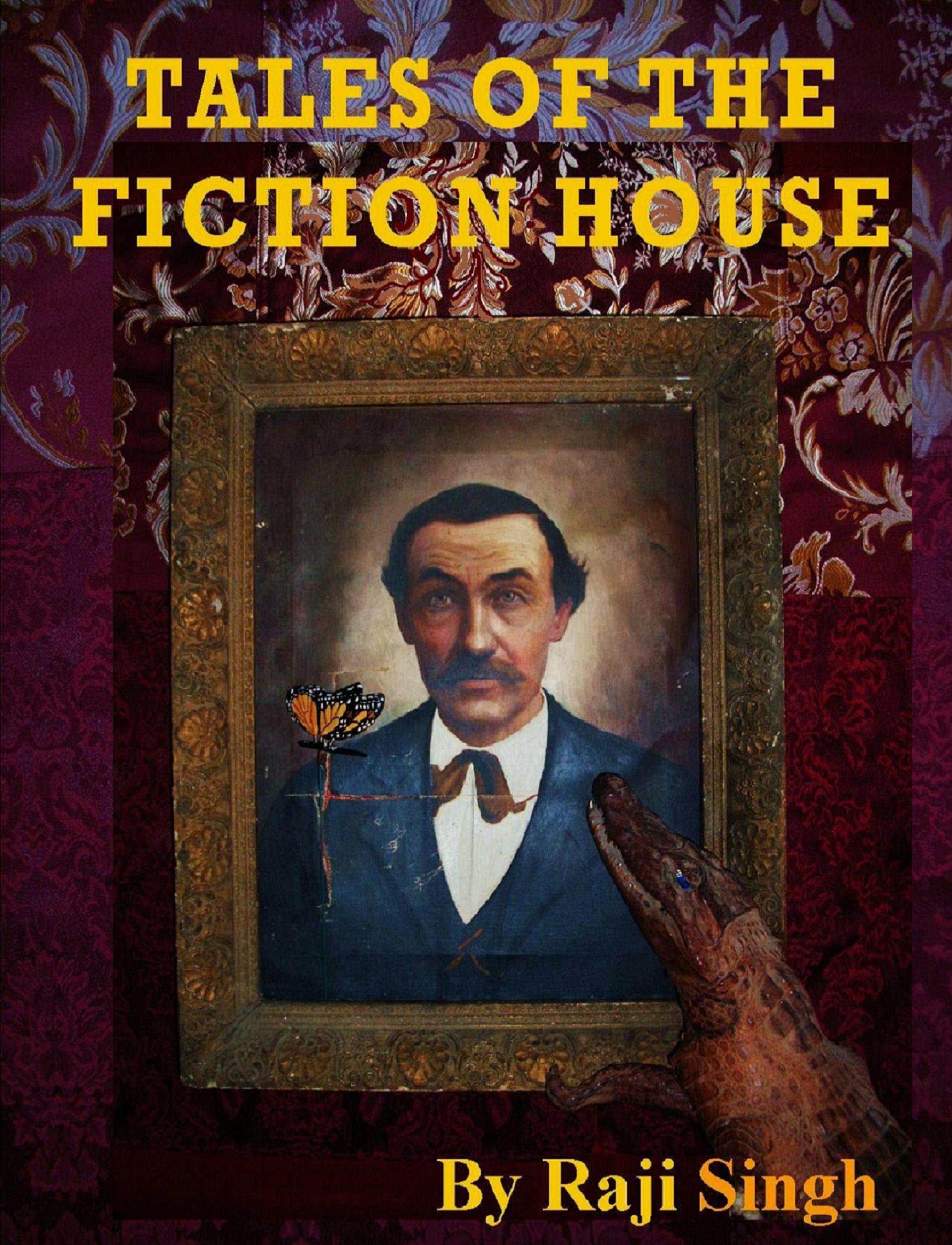
Read accounts of her horrible fate from which she emerged victorious, in the novel, Tales of the Fiction House, by Raji Singh. ~ ~

©2012 by Raji Singh

.

Posted in historical fiction, Humor, Satire, Writing | Tagged , , , , , , , , , , | Leave a comment

Writing Technique: ARCHIVING THE FICTION HOUSE PUBLISHING COMPANY

By Raji Singh

Technique and style observations about Fiction’s chief writer, William ‘Golden Boy’ Golden:

Influenced by Sophocles and Shakespeare, Golden often anthropomorphized characters.  Two of his favorites were the sun, a distinctively British bloke, and his ‘lie-dy’, the moon.  They became his camera, eye-in-the-sky narrators.  They advanced the panorama of a story.

Contrary to many critics of his day, who claimed the cowboy writer probably got hold of a bad batch of peyote while on the trail, he was inspired mostly by his editor, half-brother, James Thaddeus ‘Blackjack’ Fiction who looked to ‘Poppy Sol’ and ‘Luny Mum’ for companionship during his orphan-foundling times.

I came across this communication ‘pigeon-mailed’ by Golden to Blackjack before the onset of the Civil War.  Don’t know if it’s a draft for a proposed novel about his actual exploits as a freedom fighter, or a composite of many.  I’ll find more about it I’m sure, as my archiving, archeo-apologizing continues.  –

Raji Singh, author of, Tales of the Fiction House.

(As many of you know, I am Blackjack’s great-great grandson and I am resurrecting his company, the titan of 19th and early 20th century booksellers.)

GUN-RUNNING AT THE FICTION HOUSE PUBLISHING COMPANY

The buckboard bounces over the dusty Kansas road.  The drover straightens his girdle, adjusts his bustle, and opens his parasol to protect fair hide from Poppy Sol’s caustic glare.  He glares defiantly right back up at Sol.

‘E be what ‘e be, Poppy,’ Luny Mum, a vanilla pie-in-the-sky intercedes by winking from afar in the horizon.

‘Hhrmph!  That ‘e, mayest be, Mum.  Still, can’t help believen’ I can change the bloke around to my way a blinken’.’

The drover’s horse whinnies a warning – approaching rides and riders.  The rattily-dressed, unshaven men are pro-slavers, known as border ruffians in mid 1800’s ‘Bleeding Kansas’.

“Thanks Gladiola, old girl, I’m on it.”

Click.”  Rifles cock.

The drover reaches into his calico dress and clutches the handle of the gun holstered in his corset.  No worry about the oncoming 5 o’clock shadow that necessitates a quick straight razor shave, Rrrose Heather had taught him to apply his makeup so well even a perceptive groundhog wouldn’t notice a shadow ‘til around 8.

(…and, once again, my notoriously eccentric great-great granduncle, the author William, ‘Golden Boy’ Golden trots out his ‘Willamina’ persona, not for just another book, but also for the ‘cause’, – a free state amongst those enslaved.)  – Raji

…Luny Mum wrinkles, worried.  ‘What will become of our Golden Boy, Poppy Sol?’

Sol’s rays stroke her reassuringly.  ‘Be just three of the blighters, Mum. ‘E’ll ‘andle em.’

The riders stride over to block Gladiola’s path.

“Whoa, old girl,” Golden Boy whispers.

     “Hold on there Missy,” the ringleader barks.  “Got some questions need answering.  What’s youren name?  Where you headin’?”

“Willamina.  To church.”

“Don’t rightly remember ever seein’ you at service.  I’d ‘member seein’ a pretty little thing like you.”  He reaches down to pinch Golden’s chin.  Golden leans, away from his reach.

His pard jokes.  “You ain’t ever seen her there ‘cause you’ve never been there, Jake.

The other pard chuckles.

Jake dismounts, leans against the buckboard’s seat, and breathes deep.  “Ooh, you sure smell sweet Miss Willamina.  Wish we were trailen’ your scent steada’ stinkin’ abolitionists bringen’ in arms to kill off good southern immigrants doin’ their duty to keep slavery alive.  Well darlin’, I hate to say it, but we can’t be too careful, so we gotta see what your haulin’.”

“Stinkin’ Jayhawkers,” Golden Boy nods and sympathizes as they pry the lids off the crates.

“Bibles!” says Jake.  “Well ain’t that rich.”  Jake and the pards fumble through some of the pages of the books so unfamiliar to them, and then Jake spits.  “Go on, missy.  Get about your way.”

They ride away, missing completely, beneath the crates false bottom, the stash of rifles supplied by Blackjack Fiction to Golden Boy to arm the Free Staters.  (editor’s note – I added the names well over 100 years later – Blackjack and Golden Boy.  Out of necessity, they kept secret their abolitionist activities.)

Soon, …

“Hii-yaa Gladiola.”  The wagon rolls on.

‘Don’t look now Golden Boy, but one of em be riding back,’ Poppy Sol blinks.

Golden Boy tips his bonnet skyward.  ‘Thank ye, Sol.’ He clutches his gun again.

Jake approaches as the pards wait just out of hearing range.

“What say, Miss Willamina, I accompany you to the picnic after church on Sunday.”  With his sleeve, the suddenly shy slob smudges away nervous drool that waterfalls from the corner of his mouth.  He stutters, briefly.  “It-it’ll be a f-f-fine day for dumplins’ and pie.”

“Why, landsakes, Jake.  Any girl be pleased as punch havin’ such a fine gentlemanly escort.  Of course I will.”

He smiles crookedly then rides away.

“Stinkin’ border ruffians,” Golden Boy curses to Gladiola as he takes a shotgun from beneath his dress and takes bead on the pro-slave renegades.

‘Will ‘e blast ‘em to kingdom’s come, Sol?’

‘Won’t ‘e Mum?’

Mum waxes nostalgic.  ‘Ye know, Sol, I say – NOT!  No fair lass would pass a chance on a social occasion.  I be sayin’ she’ll, um, he’ll, go with ‘ims.’  What better way to infiltrate that world of scalawags!’

Coming next:  ‘LEATHER, WHIPS, AND GUN-RUNNING ON THE RANGE – WHERE THE ARMS ARE BOUND.’  (where often is heard, a tortured word, and the skies are cloudy all day.)

©2012 by Raji Singh

Posted in historical fiction, Humor, Satire, Writing | Tagged , , , | 1 Comment

Research: a burden, or a writer’s best friend?

By Donna Gillespie

Whenever I complain over the fact I seem to need at least ten or twelve years per book, I nearly always hear these words of comfort — “But of course. You have to do all that research.”

At first I’m tempted to agree — after all, the person is trying to help me out. But the fact is, it’s nowhere near true.

Actually the research might be the least aggravating, most straightforward part of writing an historical novel. If you can read, you can do research. Research is fun — even a heart-pounding thrill if you’re in love with your subject matter, almost to the Indiana Jones-and-the-Temple-of-Doom level. I can fancy myself a hero-archeologist bravely unearthing facts that will rock my characters’ worlds. At the least I’d compare it to a treasure hunt where you almost always find the treasure. Research helps you shape your story, and on a good day it can even suggest a nifty plot complication, fully formed, little assembly required. While researching your story, you can fantasize you’re a sculptor or painter sniffing around for “found objects” to use in an art piece. (Now, incorporating that research — that’s a whole other ball of wax. One pitfall — falling prey to what we used to call “research rapture” in Leonard Bishop’s group. That’s when you can’t part with any of the succulent facts you’ve rounded up and so you use them all, and end up doubling your book’s length.) But doing the research just isn’t what causes me to pack in the ten or twelve years.

That award goes to formulating the plot line. That’s the real hair-puller. Finding that story complication that that puts your main character under the right kind of pressure — meaningful pressure. Discovering the scenes that bring out new aspects of your characters’ personalities; setting up the kinds of problems that open  out the story. Each plot complication must pluck the right emotional note in a reader’s mind. A story line itself can be a kind of poetry; some plot twists seem to thrum archetypal chords for reasons baffling to name; others don’t. Coming up with plot complications that feel right, that hopefully will linger in memory — now that’s what’s hard.

Historical novels do require massive amounts of research — they’re born from it, in a way, like a lotus out of the swamp, and they’re closely guided by it as the book progresses. But sometimes I think research is overrated — at least for novelists, not for writers of historical nonfiction. An historical novelist must be an artist first. You’d lose your audience otherwise. You’re using impressionistic techniques to spark a reader’s imagination. When lost in the excitement of a scene, a reader receives the impression that a book has revealed much more about a period of history than the author, in fact, has. And consider this — if new archaeological discoveries happened to negate a fact an author has woven into an older book you love, would you suddenly love the book less? Has the story somehow become invalid? Or did its “validity” rest on something else all along — all that alchemy involved in the writer’s ability to make a time period come alive? In crankier moments I think expecting to learn history from an historical novel is like trying to learn botany by studying impressionist paintings of trees. There’s truth in those trees; it just isn’t literal truth.

Posted in historical fiction, Uncategorized, Writing | Tagged , , , , , , , , | 21 Comments

Eternal Writing, A Children’s Story

Eternal Writing, A Children’s Story.

Posted in Short story, Writing | Tagged , , , , , , | Leave a comment