Eternal Writing, A Children’s Story

By Catherine Hedge

Once upon a time, a young boy in Egypt had a dream.  Raham dreamt of the future not tomorrow, or next year, or a hundred years, but three thousand years away.  His dream was full of children, with bright eyes and curious minds.  They lived in a land so far away, his father’s fastest falcon could not fly there in an hour, or a day, even though it flew through the sun day and moonlit night.

Raham woke up in tears, realizing he would never see these beautiful people.  They would never know he existed.  All that would be left of him would be dust blowing in the Sahara, or his teardrop fallen into the Nile.  He was so sad, he couldn’t sleep.

He heard his father, an artist for the pharaoh, working in his shop down below.  Since the days were burning hot and stone-carving was difficult, his father worked at night by oil lamp.

Raham crept down the stairs, and peered into the shop.  His father was tapping lightly on an alabaster lion with its tongue sticking out playfully.  Raham knew it was a gift for the young prince, Tutankhaten.  Only the best artisans created work for the royal family and his father was the best of them all.

When his father set down the statue and stretched, Raham tapped lightly on the door frame.  “Father? Shall I pour you some fresh water?”

His father knew instantly that his son was troubled.  Raham was a boy who studied hard and slept well.  Nighttime visits were rare.

“Yes, My son…You must have known I was in need of company.  Please…” He motioned for the boy to sit on a stool nearby.

Raham and his father both drank deeply and Raham told his father of his dream.  His tears threatened to fall on his bronze cheeks, but he blinked them back quickly.   His voice shook when he finished, “And they will live, never knowing of me…or you…or even our little prince, Tutankhaten.”

His father reached out and touched his son’s bare shoulder.  “Ah, but you are wrong, Raham!  You have a great gift.  You are becoming a scribe, learning to write the sacred Hieroglyphs, and you have the artist’s hands of my father and his father before him.”

His father picked up the little lion and brought it near the lamp.  “Read this, Son.” Along the base, his father had carved tiny shapes of reeds, owls, and snakes, spelling out a blessing for the little prince.  His future name, Tutankhamen, was carved on a medallion on the lion’s chest.

Raham traced his finger along the base, “May Ra give thee Laughter and eternal life…I do not understand your meaning, Father.”

“Someday, a thousand thousand years from now, a scholar may hold this in her hands.  She will be able to read what I wrote by the lamp light while you were sleeping.  Perhaps she will read the words outloud, as you did and wonder what happened to Tutankhaten, and to me.  In that moment, I will live again.  ”

You, my son, will make beautiful things, rich with the poetry in your heart.  You will write and those words will live forever!”

Many years later, Raham worked by lamplight in his goldsmith’s chambers.  He tapped lightly on a small gold chest covered with figures of the Pharaoh Tutankhamen and his young wife.  As he finished the last words of the love poem around the rim, he thought of his father…and of the children who would someday see his writing, his masterpiece.  He smiled and whispered, “In that moment, I will live again.”

Posted in Teaching, Writing | Tagged , , , , , | 3 Comments

Charles Darwin’s Victorian Romance

By Raji Singh RESURRECTING THE FICTION HOUSE My hired ‘experts’ jokingly, good-naturedly call me an archeo-apologist.  It is because of my zeal for my reclamation project – that of unearthing and archiving files, notes, books – over a century’s worth … Continue reading

More Galleries | Tagged , , , , , , , , | Leave a comment

Roller-Coastering with Raji Singh: Book Release

Roller-Coastering with Raji Singh: Book Release.

Posted in Humor, Writing | Tagged , , , , , , | Leave a comment

Roller-Coastering with Raji Singh: Book Release

By Catherine Hedge

When I climb on a carousel, I’m pretty sure where I’m going.  Up and down and around.  The route is the same with variation provided by bejeweled horses, tigers, and occasional chickens.  If you’re timid, you can ride on the sleigh and have a nice, safe trip.  Predictable, but safe.  But, it takes a real adventurer to ride on a roller coaster, especially for the first time.  You start climbing up that endless peak, not knowing if you will come down into a bank, an upside-down spiral, or split off into some nether world and never be seen again.

Listening to a rough draft of a novel is a lot like taking carnival rides.  Sometimes the trip is smooth with a clear destination evident.  The author spices things up with interesting characters and keeps up the pace.  A fine carousel of orderly writing with a satisfying end.  (Probably wrote an outline.)

But sometimes, you have a carnie like Raji Singh, who goads you into riding a monster… towering, twisting, bedeviling… a manuscript that careens into creativity.  When we listened to the first draft of Raji’s Tales of the Fiction House, we were sometimes lost, confused, but always surprised.  We hung on believing that eventually, Raji would revise his tales and get us to the end safely.  Exhilarated, but safe.  And so he did!

We at Pen in Hand are delighted to announce the release of Raji Singh’s book, Tales of the Fiction House.   Sample chapters are available.  Once you’ve finished, you can delve into new original tales posted on his blog.  We can guarantee you’ve never been on a ride like this one!

(Raji has kindly agreed to share his book description.)


Tales of the Fiction House, by Raji Singh

My great-great grandfather and I were best of friends, although we never met.

Fire and shipwreck orphan us – 140 years apart.  We escape to imagination to survive our fate.  There, midst flights of whimsy we find one another.  Companionship quells our loneliness.  We create fables and tales, shields against a harsh existence.  We must battle animals and humans of prey.

Together, he, the future abolitionist-publisher James Thaddeus ‘Blackjack’ Fiction, and I vault from glory-laden adventures to tragedy and then to triumph.

I am Raji Singh and this is my story.

Tales of the Fiction House, for adults but suitable for younger adults, follows in the grand tradition of Aesop, Grimm, and Hoffman.  Whether you’re spending 1,001 nights in Baghdad, itching to hitch a ride on the Canterbury trail, or wringing your sweaty Hans Anderson on a hot summer day, you’ll enjoy a cool respite with these all new legends and myths.

You’ll encounter a land-sea creature with as many tattooed tales on his shell as his shipmate an ancient mariner -the Poseidon of whale-talers- can ever spout-out.  You’ll sail along on the Beagle and be privy to Charles Darwin’s Victorian secret romance with Harriet Beecher via carrier pigeon air-mail.  You’ll claw your way through jungle dangers with the help of a kind ‘Tiger-man’.  Vicious ‘gator-men’ will lore you to their swamp.  The stories’ wise ladies, a gentle butterfly named Calico, and a hardened ‘Captain Polly’, will fly you to exotic worlds no human’s ever seen.

A thousand and one Tales inhabit the Fiction House.

You’ll want to visit them again and again.

©2012 by Raji Singh

(Thank you, Raji, and Best of  Luck! ) 

Posted in e-publishing, Humor, Leonard Bishop, Publishing, Writing | Tagged , , , , , , , , , , , | 8 Comments

Beginner’s Luck

Beginner’s Luck.

Posted in Writing | Tagged , , , , , , | Leave a comment

Beginner’s Luck

By Catherine Hedge

It looked so easy at first!

Learning to write is a lot like learning to play a musical instrument.

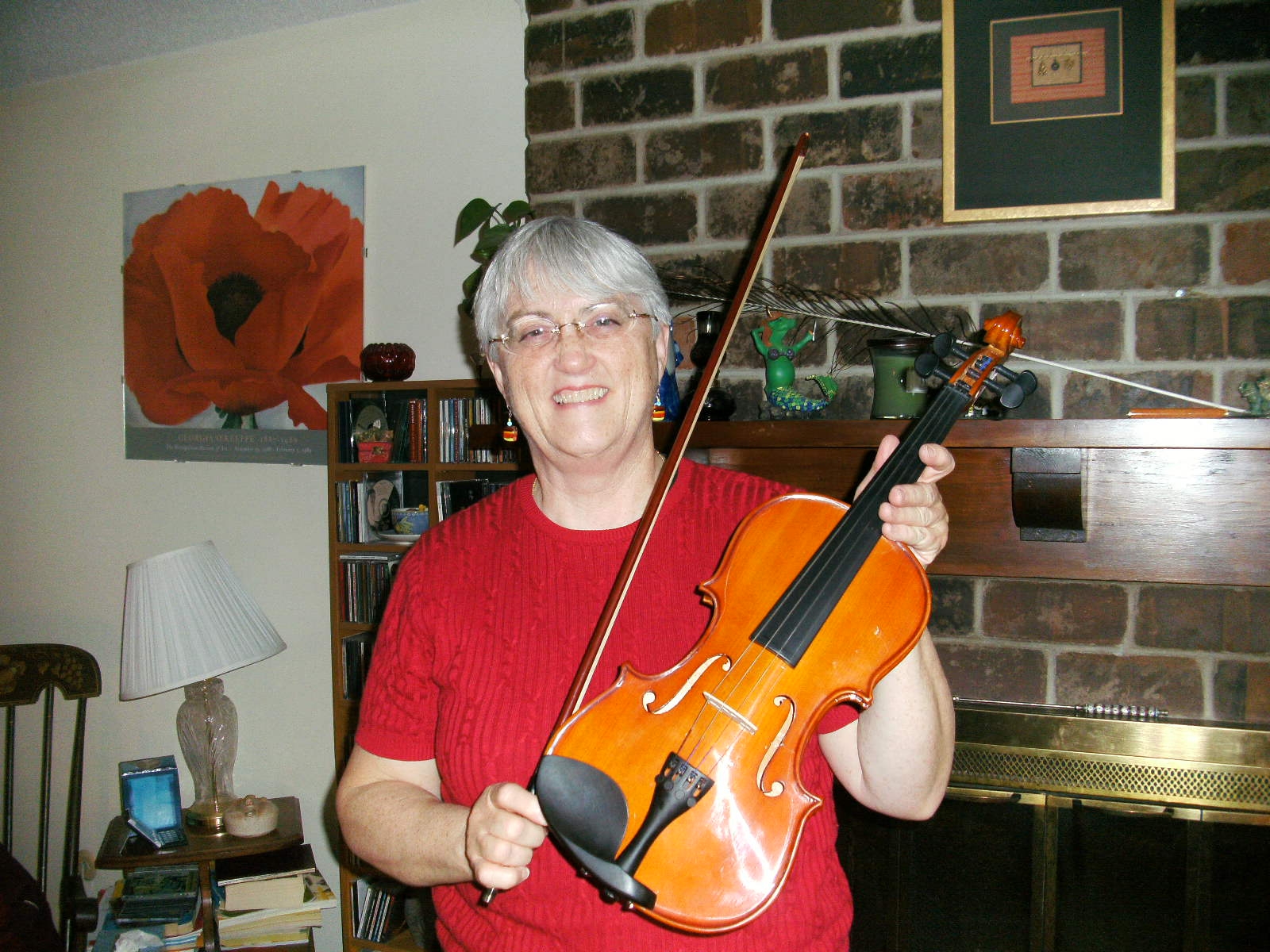
I’m trying to learn the violin.  “Trying” is the best word…for both me and my instructor.  I had visions of playing “Meditation” by Massenet in a few years, but it looks now like it will probably be something like, “My Bonnie Lies Over the Ocean.”  Have you ever heard the Electric Tonalities that start out Forbidden Planet?  That’s what my long bows sound like.  It’s agonizing.

Fortunately, I have a dear friend, an accomplished violinist and teacher, who has incredible patience.  She won’t let me skip a lesson because I don’t feel I’ve practiced enough.  Instead my teacher offers a “Check up” just to make sure I’m not learning any bad habits.    Each time she comes over, it seems as if she’s repairing an error I thought I had banished months ago.  She has a special gift, though…a genuine excitement that someone so badly (True that) wants to take up the instrument she loves.  Week after week, she reminds me to compose myself, to not completely stress out because I make mistakes.  What I could play moderately okay hours earlier is now a cacophonous mess.  Primarily because I am as tight as the E string!

Violin looks simple, but I was told the more simple the instrument is, the more difficult the role of the musician.   I’m used to the piano where a “C” is always a “C” and stomping down your foot makes the notes sustain. I’m stomping my foot a lot, but it’s not making any difference!

Instead of collapsing in an exasperated sigh and a growl of “Let’s try that again, Shall we?” my teacher knows how to convince a beginner to keep going.  First, she pays attention to my initial attempt and catches one element (of many) that is destroying my sound.  She corrects just that and my next try is much better.  My teacher compliments me on the area of improvement.  My heart leaps with hope and I think, Maybe I can do this, after all!

Since I’m not devastated, I have the energy to listen to her honest critique.  Once I had a teacher who only said positive comments.  I knew that no matter what I did or did not do, (like practice), she would never be visibly upset with me.  I don’t think my playing changed one whit that entire year.  I had a different one, Miss Hatcher, who’d hit my hands with a ruler and shout, “Count! Count! Count!”…but that’s another story.

Next, my teacher gives very specific instruction, including modeling, of the techniques I need to practice.  She doesn’t just tell and run, but watches me, coaches me, so that when I practice alone, I won’t pick up still another bad habit.   Before she leaves, she always reminds me of something I’ve done right, that I am making progress, and that eventually my skills will come together.   Just with a new, more achievable target! (Ie: Bonnie, not Thais!)

He dared us to write well!

This whole process mimics what I’ve seen with beginning writers and a great writing coach, like Leonard Bishop.  Whether the writers are middle school students, college professors, or octogenarians, each person brave enough to read his or her writing in front of others, believes the piece has merit.  It also carries with it a substantial portion of the writer’s spirit.  It’s not “Just a piece of writing”, but the time, effort, and dreams of that individual.  If you have a coach who only tells you, “It’s marvelous! A Best Seller for sure! You MUST keep writing,” you will never improve.  If the coach tells you, “This is terrible.  You have no talent,” you may never write again.  But…if you have beginner’s luck, you will hear three things:

  1.  What you did well (Even if it is just, “Congratulations on finishing a scene!)
  2. Of all the possible errors which could be listed (but aren’t), what are the one or two most important areas of difficulty holding back your writing? Why are they problematic in general? What techniques can you use to overcome those deficits?
  3. The Challenge….Because I believe you have the ability and the will to write well… “Here is something you might try next time and here is how to do it.”

Most importantly, that coach shares passionately the belief that when we write, it is important.  That no one else can say what you want to say in the unique way you can say it.  One of my favorite memories of Leonard Bishop is when he told my middle school students:  “You are very special.  You have voluntarily decided to come here, to step away from the many distracters in your life and take time to write.  And when you take the time to write down your thoughts, your emotions, your experiences, and others read them… you touch people’s lives.  And that is really very special.  (Long pause…) Now, let’s get to work!!”

Posted in Leonard Bishop, Slice of life, Teaching, Writing | Tagged , , , , , , , , , , , | 6 Comments

It’s Cabin Time (Summers of 1930’s)

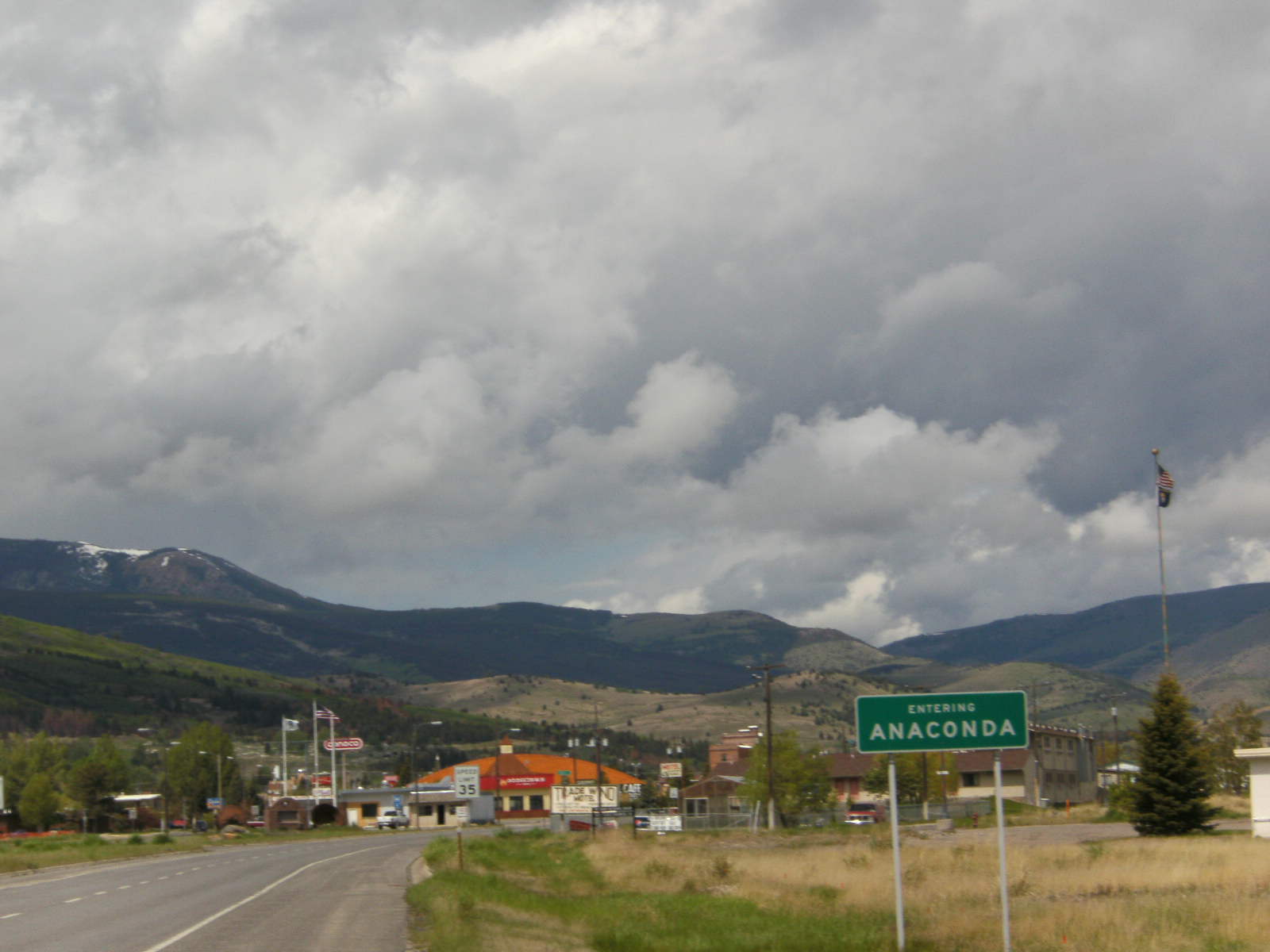
(Joseph Hedge lived for summers!   He shared why in this is a glimpse of his childhood in the early 1930’s in Anaconda, Montana.)

 By Joseph F. Hedge

Welcome to Anaconda

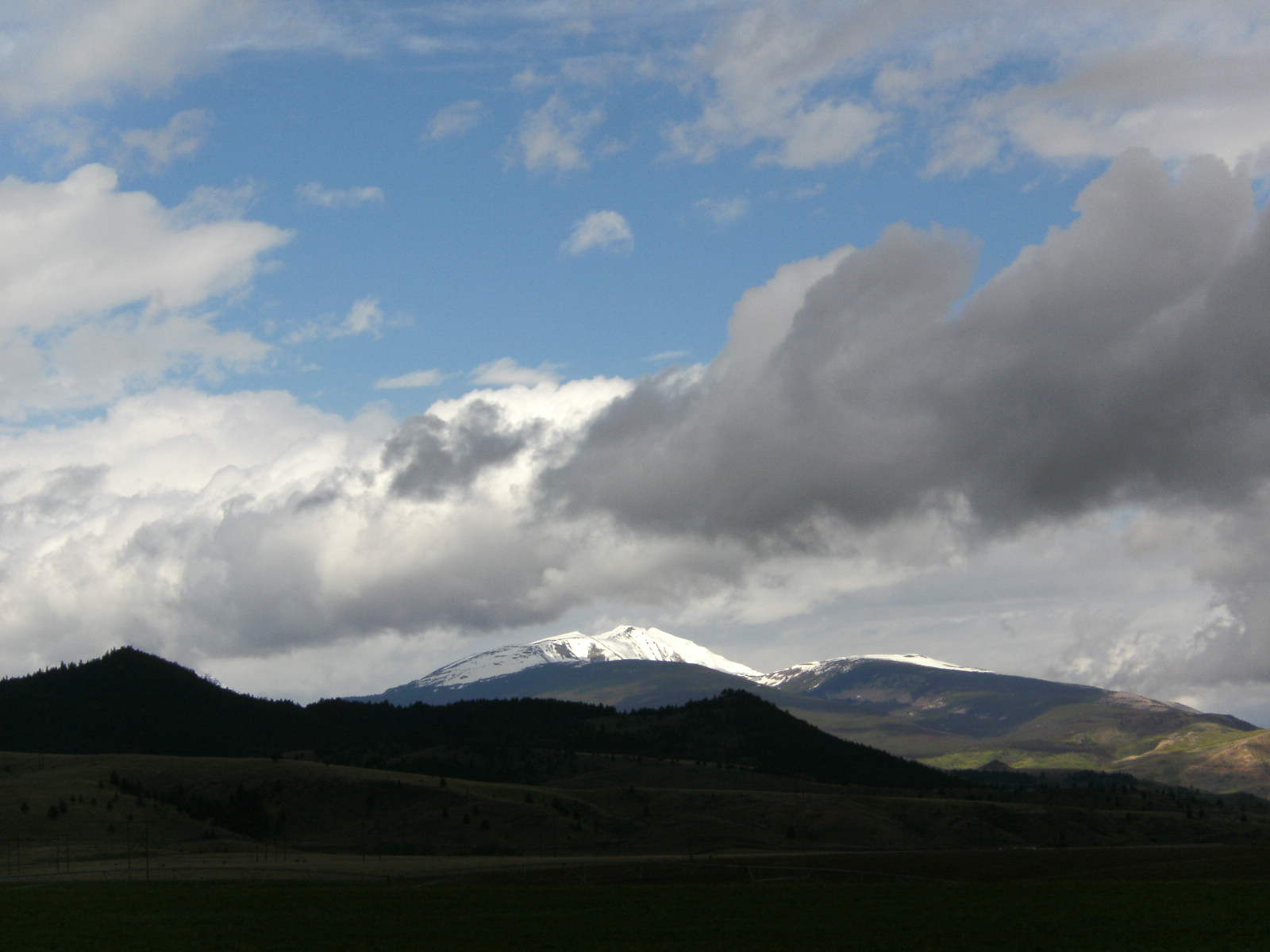
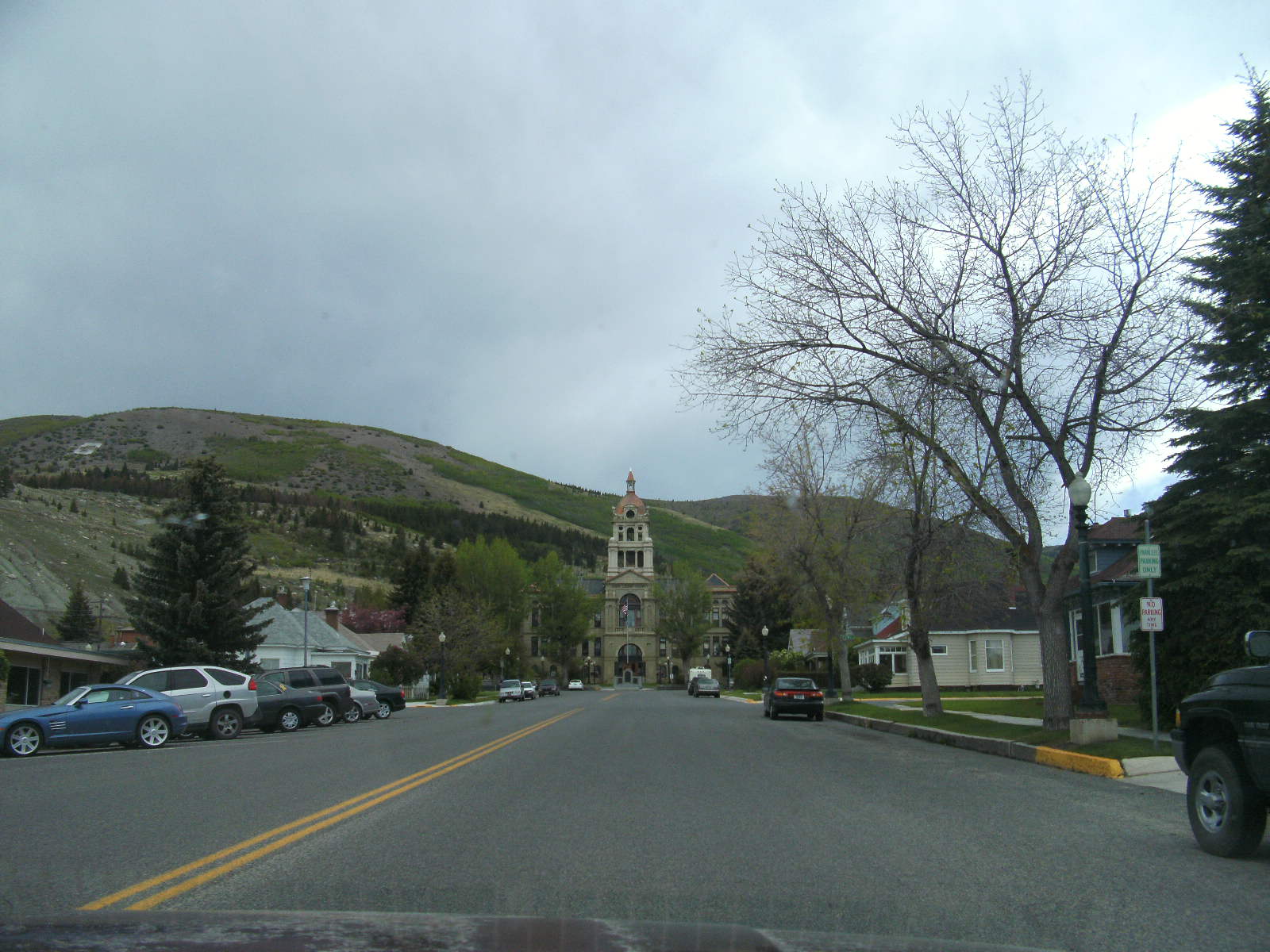
Behind our yard and across the alley was a large hill.  What do you do with a hill when it is in the neighborhood?  Well, of course, you get all of your buddies and plan just where you are going to put your cabin.  After the decision is made,  you began the process of finding where all of the lumber is coming from to build the cabin.  It never occurred to any of us that we would be unable to get all we needed by procuring from old piles of wood, scarfing a few pieces from some of the dilapidated garages in the area, and having plenty of discarded lumber from the flume that sent water to the smelter.
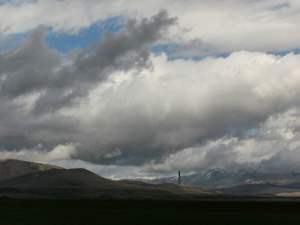
The Smokestack from the Smelter

The flume was always being repaired and planks that were rotting from the moisture were replaced and just set aside.  This is where we would find the wood for our floor.  Other pieces of lumber could be found at our own homes.  The planning stages completed and some of the lumber hauled up the hill, it was time to dig out the construction spot.

All of this activity began after school was out in the summer.  The frost was gone from the ground and our folks wished we were back in school.  There were eight of us involved in most of the neighborhood projects, my brother Bill, Bill Kloker, Freddie Hummel, Dick Moreland, Al Jacques, Eddie Peterson, and Michael Judge.

Most of the major decisions were made by my brother Bill or Bill Kloker.  They were the oldest and biggest and meanest.  When it came time to dig, everyone did his fair share.  The mothers could attest to that because they had to clean us up each day after our hard labors.  This was not a project that would be completed in one day – not even in one week.  It would take us a week and half to dig out our position, meanwhile playing soldier, finding pieces of fool’s gold to make us all rich, and watching our homemade kites fly during break periods.  Also there were times we just had to make pictures of the clouds passing by.

We all would bring our lunches so we wouldn’t have to go home until supper time.  But always when we really got into the cabin fever we could hear any one of the mothers holler, “I need you to run to the store!” We knew from whom that demand came and we would argue as to whose mother it was, at least until the second call came.  Then the errant son would grumble and leave, go to the store, and come back.  After being gone long enough, each of us would gripe about his being gone and then find out exactly what he had to go to the store for.  We didn’t care, but we felt that he should share this information with us.  If by any chance he was lucky enough to get some penny candy, we also expected him to share.  How did we know and he didn’t tell?  We could tell by his breath and he was required to breathe in our faces as proof.  Or he would stay away for a longer time and have a better excuse as to something else his mom had him do.  We gave him the “eagle eye” just to check on his story.  To give the “eagle eye” you half close the left eye and open the right eye as wide as possible and tilt your head a little forward and to the left.

Back to the digging and some safety concerns that had to be attended to.  If a baseball-sized rock would start down the hill, it often would hit other rocks and an occasional big rock would be dislodged.  “Not important,” you say?  Well, those who had their homes built next to the hill thought differently.  Many of them had rocks hit their houses, break windows, bang into the walls, and scare the inhabitants.  Whenever we would see a big rock being dislodged, the hillside would suddenly be cleared.  We waited for repercussions from the neighborhood.  If the rock stopped before it hit a house, we would return to the job at hand.

When the digging was finished and the pad for the cabin was completed, we would place all of the flume planks in a row and toenail them together.  Our floor would be completed in a short time.

Then someone eyed the Indian tobacco growing like a weed next to our cabin site.  We thought this must be what the Indians used in their peace pipes.  Bill Kloker just happened to pull a corncob pipe from his pocket.  We had to try!  We stripped the tobacco from the stalks, tamped it into Bill’s pipe and passed it around so that we might have peace in our group and eventually in our cabin.

One puff proved you were with it; the second puff proved you had all you needed.  The heat burned the inside of your mouth and maybe the folks would be looking to see if you were OK. Kloker finished the pipe, tamped it out, put it back in his pocket, and promptly threw up.

The next three days were spent putting up the sides and roof of the cabin.  Oh sure—there were some open spots where the light would come in but we would patch them on the outside.  This would seal us in and the rain out.

Now that we had our cabin, it was time to furnish it.  Hummel had a pot-bellied stove that his dad gave us.  All we had to do was haul it up the mountain.  We all groaned at the idea but Hummel said, “My dad gave it to us, now get your asses busy.” He always talked that way and each time he swore we would cringe.  He would smile because he knew we couldn’t talk like that for all our asses would be flattened by our dads.  We hauled the stove up.  It took us all afternoon.  Then we had to cut a hole in the roof for the chimney and then we’d have heat.  Yes, it was still summer, but a cabin has to have heat.  A door was the final part of the construction.  It had to have a peep hole to check on the arrival of strangers that were not to be admitted.

Our first visitors were three of the dads.  They inspected our work (for protection I am sure.)  They indicated we had done a good job and the cabin would last most of the summer, unless we had a strong storm.

Our first meal was stew, –“Dinty Moore” to be exact.  Two cans heated on our stove, tin plates from our houses and silverware—a spoon each.  It turned dark fairly early that night and we had Dad’s Coleman lantern.  It was a special night.  We told stories.  Kloker told a ghost story, “Who Stole My Golden Arm.”  This had us all scared and afraid to leave the cabin.

Our parents knew what was going on and snuck up to our cabin.  As soon as Kloker finished the shocking story, they banged on the outside of the cabin.  It was emptied in a matter of seconds.

We spent many a good night in our cabin and the ghost stories came and went, but the parents stayed out of it since the first episode.  They figured our lesson was learned, but it wasn’t.  We still told ghost stories, but none as bad as “Who Stole My Golden Arm”!

I remember one day of entertainment in the cabin.  We had a dancer from the neighborhood—her name won’t be mentioned.  The dance of the five veils! (Two of them were not removed.)  How wonderful it must have been.  Oh Yes, I was there and so was by brother Bill.  I had to stand and face Bill while he looked on the dance; he felt that I should not, at my age, view this dance.  He held my face, which gave him the credibility of purity, for me.  For this I shall always be grateful, or at least that is what Bill said.

Summer’s End

The winters come early in Montana and abandonment of the cabin came pretty soon.  We cleared the cabin of all our precious goods.  The stove—back to Hummel’s.  The wooden orange crates to our kitchens.  The cabin was cleaned and left for the winter snows to collapse it to the ground and await our return in spring.  The thought of eating dinner at the cabin in ten degree below zero weather did not occur to any of us.  Also—we were back in school.  It was turning dark earlier.  We had homework to do.  “Early to bed makes a boy healthy, wealthy, and wise.”  This was Mom’s saying.  So far the healthy has held up.  I did question wealthy or wise.  I wasn’t wise enough to realize I had no money, but I went to bed hoping.

We planned on what we were going to do next spring,–build a two-room cabin, or two levels, or side-by-side cabins.  We would do something exciting…we always did.

What finally stopped this year to year routine?  That answer came with puberty, girls, football practice, baseball practice, after school jobs, learning to drive, and driving.

The tradition continues.  Our memories are clear as when we owned the hill.  Now it was time to transfer ownership to the younger children building their cabins.  They now own the hill.  They use our shovels, hammers, spare lumber, and are called to go to the store for us.

How things change and still remain the same.

Posted in Humor, Nostalgia, Slice of life, Uncategorized | Tagged , , , , , , , | 1 Comment

The Perfect Writing Teacher

The Perfect Writing Teacher.

Posted in Writing | Tagged , , , , , , | Leave a comment

The Perfect Writing Teacher

by Catherine Hedge

Exhibit A

One of the cruelest myths of writing is that if you are a really good writer, you start with “Once upon a time…” and reach “The End” in one free-flowing, unstoppable, lyrical explosion of brilliance.  Perhaps the novel appears complete in your brain, like Athena bursting from the head of Zeus.  Or the characters come to life, take over your spirit, and force the words through your compliant mortal form.  No need for erasers or delete keys.  No dead-ends, rewrites, writer’s block, or dropped scenes.  Beware!  For those are hallmarks of the Wretched, the Unpublishable, the Hacks.

If you are truly great, you will be able to write just exactly like your teacher, or professor, or writing coach, and use exactly the same processes that they have bestowed upon you.  This is the foundation for traditional writing exercises such as an entire freshman college class writing on the same topic.  If you’re desperate, you can buy a thousand books wherein the author describes a fill-in-the-blank outline or 12-step solution to marketable writing.  The only problem is these don’t work, unless you find the author whose brain is precisely like yours.

I have a homey example of why this one-size-fits-all approach is a disaster.

Exhibit B

This week, I was playing Legos with my five-year-old grandson.  We decided to count how many people characters we had.  I thought this was a good chance to help him practice his grouping by ten.  So, I counted out 10 and put them in a pile.  (Exhibit A)  Then he counted out 10 and lined them up neatly.  (Exhibit B)  I counted out the next 10 and encouraged him to clump them together. He counted out and lined up the next 10.  This continued to 80.  No matter how I encouraged, he crafted rows and politely refrained from organizing my stacks, though I’ll bet he wanted to do so.  If I wax poetic on the beauty of the flowers, he takes an appreciative sniff and explains that bees use nectar to make honey.  I like reading picture books.  He likes sight-word flash cards.

I can predict, I believe accurately, that he will become a vastly different writer than I am.  I enjoy the messy discovery of writing, the random insights that make the plot twist like the Snake River, and the eager anticipation of rewriting so everything fits together…eventually.  I’m sure this approach would be inconceivable to him.  The time I spend in my first draft, he will use to create an outline, a clear direction, and a defined end-point before he begins writing. (I’ve known authors who craft 50-page outlines before they write the first paragraph.)   I predict we can both be creative, but the paths we take to get there will be incomprehensible to the other.  How could we possibly find a writing teacher who could reach both of us?

A writing coach is powerfully influenced by his or her individual writing style.  It is natural to feel, “Hey, this works for me, so it must be right!”  Someone who thinks random and abstractly will love brainstorming, sharing bits and pieces from “writing prompts”, and celebrating a thousand starts, perhaps with little ever finished.  Others will insist on outlines first and lists of rules, “Never change viewpoints in a scene” or “Never open with a weather report”.  One list I saw had 45 “nevers” for the start of a novel.  Writers can be kept busy for years doing various writing exercises for the group, entertaining themselves with the weekly assignment, and dodging the difficult task of writing their own, meaningful work with the excuse, “I’m not quite ready yet.” (Sometimes with the writing coach’s corroboration!)

However, if you keep searching, you will encounter a teacher (like Vicki Spandel), a professor (like Elizabeth Dodd), or a writing coach (like Leonard Bishop)  who sees beyond her or his ego.  You can identify them by some key characteristics.  They say, “Yes, writing is hard.  But if you really want to do it, there is nothing better in life than to write!”  They will tell you when you’ve done something well, but unrelentingly push you to try something new.  When you hear their students read their work, each piece is vastly different like jazz improvisation…skilled, flowing, a unique creative expression.  They do this by teaching us the strategies to use, elements that must be used to make our writing come to life.

For example, it doesn’t matter if Charlie is writing about an eight-foot tall warrior elf, the 23rd president, or a sentient squid.  He still needs to characterize the subject with details such as:

  • physical description (including setting)
  •  what the character thinks, says, or feels (and why)
  • what the character does to others
  •  what others say about or do to the character

Fine writing teachers are able to step back from their own styles.  They see that it really doesn’t matter which process the writer uses, messy or tidy, outline or free-form.  The outcome is what matters; writing that is interesting, dramatic, and original.  They find great satisfaction in the individuality of our ideas.  Great writing teachers are masters who lift their students to the top rung of the ladder and rejoice when they start to fly.

Posted in Leonard Bishop, Publishing, Teaching, Uncategorized, Writing | Tagged , , , , , , , , , , , , , , , , , | 11 Comments

Vancouver Night Market (repost)

Marie sends us on amazing journeys in her novel, but here she writes about a place you can really visit! Dish up a plate of that Calamari for me, Please! Thanks, Marie!

Marie Loughin's avatarMarie Loughin's "I WANNA BE . . ."

When I first heard rumors of the Vancouver Night Market, images from Neil Gaiman’s floating market of London Below came to mind. A night market should be a little weird, a little gritty, and full of eccentric individuals. I should be able to buy roof maps or rooks, or maybe a few fresh dreams. And lost property—surely someone would be selling some properly lost property. And the place should be lit up with Christmas lights and oil lanterns. Filkers and medieval jugglers should busk between stalls full of hard-to-find wares, and the eccentric people should look that way all the time, not just a couple weekends of the year.

That’s the way my night market would be, anyway.

It’s important not to build up expectations. We found that out when we arrived at the tent village wedged between a warehouse and an arm of the  Fraser River. Right off, we…

View original post 378 more words

Posted in Humor, Slice of life, Uncategorized | Tagged , , , | Leave a comment