
-
Blog Stats
- 27,658 hits
-
Recent Posts
-
Top Posts & Pages
- Attend a Writer's Conference? A Risk Worth Taking (Part 3)
- My New Bike...The Whole World in Front of Me!
- Arnold and Ithaca
- Arnold Eugene Borel
- Hearts Aren't Crystal: A Reminder
- Interview with Award-Winning Author Helena P. Schrader
- Repost: #ChillWithABookAward Winning author, Charlene Newcomb talks all things bookish with #ETLBW @charnewcomb @ChillWithABook
- A Discovered Diamond - Book Review of For King and Country
- A Glimpse of the Caribbean
- Writing Medieval Lincoln - Lincoln Castle
Blogroll
Categories
Archives
- October 2018
- August 2018
- July 2018
- April 2018
- October 2017
- August 2017
- January 2017
- November 2016
- October 2016
- August 2016
- July 2016
- May 2016
- April 2016
- March 2016
- November 2015
- October 2015
- July 2015
- June 2015
- February 2015
- January 2015
- December 2014
- November 2014
- October 2014
- September 2014
- August 2014
- June 2014
- May 2014
- April 2014
- March 2014
- February 2014
- January 2014
- December 2013
- November 2013
- October 2013
- September 2013
- August 2013
- July 2013
- June 2013
- May 2013
- April 2013
- March 2013
- February 2013
- January 2013
- December 2012
- November 2012
- October 2012
- September 2012
- August 2012
- July 2012
- June 2012
- May 2012
- April 2012
- March 2012
- February 2012
- January 2012
Meta
Pen in Hand
Happy Mother’s Day!
 This morning, the cardinal outside my window flashed his vermillion and sang, “Today will be a glorious day!” The sun was shining, though we had a freeze warning two nights ago. The air was sweet, filled with the fragrance of lilacs and irises in the garden outside my front door.
Yes, an early thought was, It’s Mother’s Day….but the overwhelming feeling was, I get to see (and hear from) my kids and grandson today! I get to call my mom!
I am truly a lucky mother. I don’t have to wait for a certain date to come along. (Sigh…it’s Mother’s day, so I’d guess I’d better call. Then Christmas. Then her birthday…Three times a year is good enough.) Don’t get me wrong. I like Mother’s Day. And the Fourth of July. And Halloween. And my birthday….fine times to just remember it is great to be alive.
I am surrounded by wonderful women. I have best friends who are mothers, sisters, daughters, hoped to be soon daughters, nieces, mothers in law and spirit, colleagues, best friends, role models, mentors, some with children, some without,… all of whom should have each day to be cherished and loved by men, women, and children we cherish and love.
So, I hope that each of you wakes soon to sunshine, bird song, and the intense knowledge that you are someone wonderful.
With love,
Cathy
P.S. For two unique views of women, I hope you enjoy my colleagues’ blogs!
Leonard Bishop on buying perfume (What an image!)
Raji Singh Shelva Fiction creating a doll’s house (I want one!)
Posted in Family, Leonard Bishop, Nostalgia, Slice of life
Tagged celebrating women, Mother's Day, Raji Singh, value of women, women
1 Comment
Concerto Petite for Miss Shelva
By Raji Singh
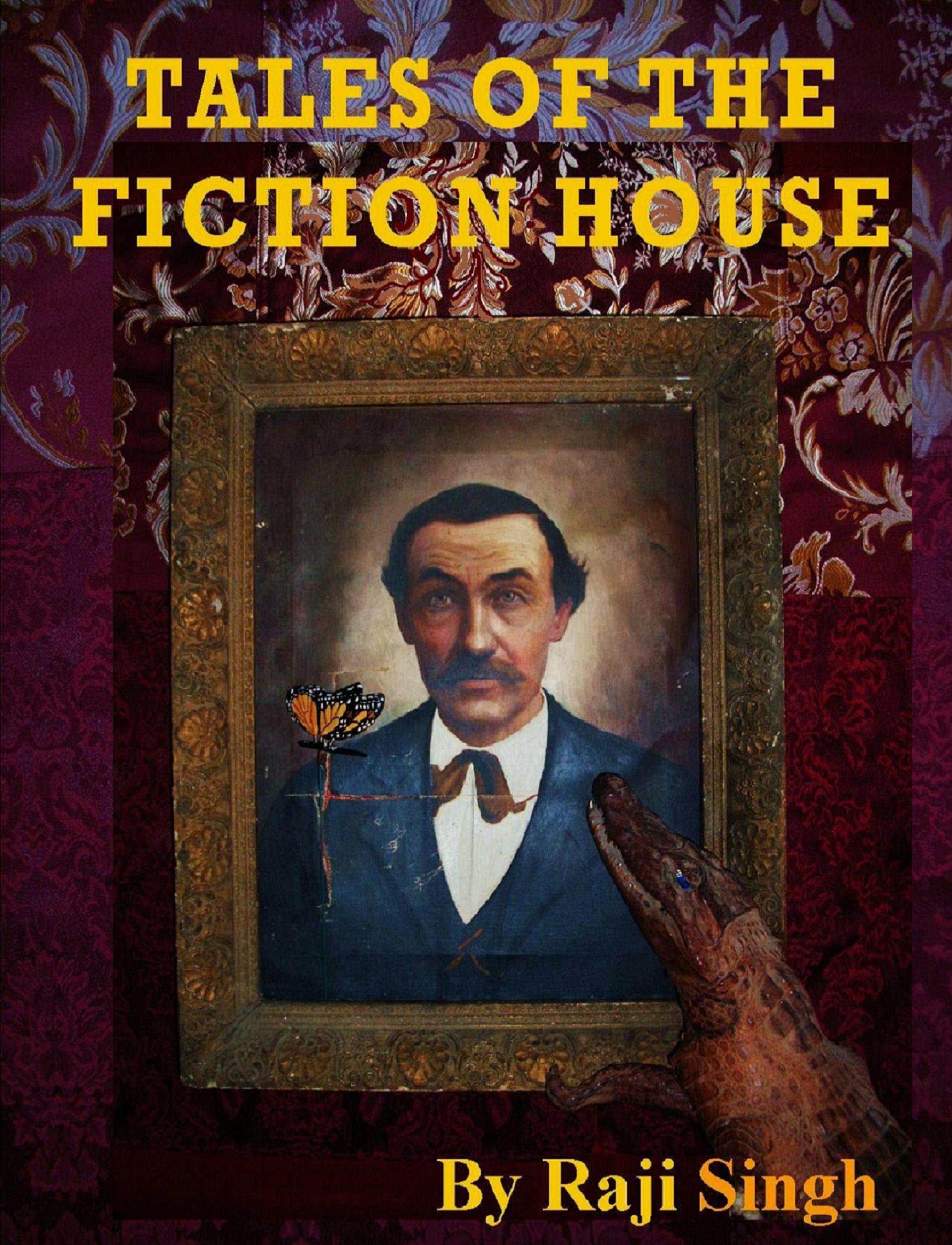
Our Founder, James Thaddeus ‘Blackjack’ Fiction
Writers should strive to utilize a character’s chains of emotions to broaden, complicate, or redirect his or her story. This change of emotion always must be valid and believable. It is the writer’s charge to do it interestingly or risk losing the reader.
Here is an example:
Horrified by deathly choices she believes Blackjack Fiction is making, Shelva writes of her pre-teen epiphany that gives her courage to confront him.
* * *
It is only an impromptu three-minute piece that Pyotr Illyich Tchaikovsky plays on the piano in the music room in Mama and Papa’s house, but my world feels a blissful eternity as the sweet chords engulf me. Have the heavens yawned open to release all their angels to surround me in their most beautiful harp strains?
Captain Polly, whom Blackjack Fiction has told me so much about, arrived Moscow a few days ago. (“She’ll fly hither and thither, but she’ll always find me when she wants to, Miss Shelva,” Blackjack said when she landed lightly on my shoulder in our garden courtyard and reached out her claw to introduce herself.)
Now, perching outside the window as Maestro Tchaikovsky plays, she unfurls her sleek wings of blue, gold, and lavender and conducts the birds of the neighborhood who are just briefly a chorus to his playing. Then Captain Polly tucks in her wings and they stop – admiring the music they surely must believe is equal or grander than theirs.
I feel and hear my heart, beating in rhythm to the gentle, swaying sounds. It is as if the music tugs at, melds with the essence of my being, and I become one with it midst the crescendo, and then a final flourish, and then an end. Tears flood my cheeks. I look over to the only other audience, Blackjack Fiction. Never before have I seen this in him. Maybe, never again will I. He weeps at the haunting notes of the Maestro.
“Concerto Petite for Miss Shelva, I shall call it,” Tchaikovsky says as he rises from the piano bench to take his leave. His touch is hot, electric, as he strokes my hair. (Will I ever wash it again?) No matter the thousands of more times I hear the piece performed throughout my life, I will remember it as he plays it this warm summer day.
Blackjack wipes his face with a handkerchief and returns to the business of the day. “Maestro, I believe you will find our publishing arrangements quite satisfactory. The world wants to know your life story, and there is no publishing house in the world better equipped to tell it than Fiction House Publishing.”
I follow them to the front door, wanting to be near Mother Russia’s renowned composer for the ages. His long, straight hair is jet, facial features sharp, eyes intense, showing his complete immersion in his artistry. His matching black suit jacket and pants, and his slightly scuffed shoes, reflect the unassuming nature of his demeanor. Seeing him walking down the streets of Moscow, you would not know this was Pyotr Illyich Tchaikovsky, the Great, unless you’d seen him at some time in a grand concert hall.
The full and complete commitment to the artistry that resides in his soul affects me nearly as much as his music. Even though I am still a little girl, his song makes me realize I must do what the music of my heart, the most beautiful music there is in this world, tells me. Now, so powerfully it says, “Have the courage, Shelva, to confront Blackjack with your suspicions. Confront him, and maybe save his life.”
When Blackjack comes back in from seeing Maestro Tchaikovsky off, I nervously but courageously ask. “Are you planning to kill the Czar, Blackjack?”
NEXT WEEK: A Confession?
©2013 Raji Singh
Read this and other stories about Shelva at Tales of the Fiction House.com or read about her relatives in the novel, TALES OF THE FICTION HOUSE. My novel is available at Amazon, and Barnes and Noble.) and will soon be in print version.
Getting Serious!
Posted in Humor, Inspiration, inspiration, Slice of life, Writing
Leave a comment
Getting Serious!
By Catherine Hedge
 When I was a kid, I used to daydream about being a storyteller. It’s in my Irish blood. My great uncles could take a two minute event and stretch it to at least a half hour, especially when beer was involved. My Uncle Bill prefers wine. So did my dad, Joseph Hedge.
My Scotch-Irish grandmother had a favorite story. With a whiff of encouragement, she’d launch headlong into the tale. Each flourish, eyebrow raise, and whisper was finely tuned, occurring at exactly the same moment every telling. Once, my ex-husband stood behind her, mimicking her every move. He’d heard it often enough to have it memorized. Grammies was delighted by our howling laughter and the tears streaming down our faces.
I remember early on hearing,”That was a good story, Cathy.” I was sitting on my grandfather’s lap. Before I could read, he’d show me the “funny papers,” the comics, and ask me to explain what was happening to him. He kept asking me “Why?” and I kept spinning tales as long as he would listen.
When we’d spend the night at our Aunt Joan and Uncle Mark’s house, there were eleven children, five Hedges and six Heistumans. We’d get out the sleeping bags, bedrolls, the cushions from the front room couch and pile into the girls’ bedroom. My little cousins would plead for a bedtime story. I’d get the top bunk, a place of honor. I’d prop pillows up around me like a throne. Then, we’d turn off the lights.
We lived in a logger’s town, Arcata, California. At that time, they’d burn the sawdust in huge cone-shaped incinerators with mesh tops. They looked like badminton birdies with red-hot tips. The sky would glow blood red and pockets of exploding pitch sent gold showers like solar flares into the dark sky. I’d lie on that top bunk, staring out over the city, and create tales until I was the only one left awake. That’s when I really decided I wanted to be a writer.
My dreams were deferred for a while, but then I found a fantastic group of individuals who also crave hearing, “That is a great story….” Now, I get to work with them every week. Yes, we are serious about our critiques and finding ways to improve our writing. But we also get to take time away from reality. For two and one half hours a week, we are the audience, getting to hear a brand new adventure, romance, mystery, history…before anyone else in the world gets to see it. I get harassed if I have nothing, praised when I do, and am continually inspired to try something new. I’ve just finished a novel, Crossing Deep River, and am sending out my first queries. Now, what’s next?
I don’t sleep on the top bunk anymore. I’m afraid of heights. But I can still imagine my cousins pleading, “Tell us a story, Cathy…” or my grandpa asking,”Why?” I’m so thankful that now, in the sweetness of a writing life, I have the time to answer him.
For some delightful reading, you might want to check out the blogs of our friends at Pen In Hand. I promise, you’ll never be bored!
Posted in Family, Leonard Bishop, Nostalgia, Writing, Writing Process
Tagged Bill Borel, Catherine Hedge, Charlene Newcomb, Dare To Be A Great Writer, Donna Gillespie, good writing critiques, Joseph F. Hedge, Leonard Bishop, Marie Hampton, Marie Loughin, Raji Singh, writing group, writing instructors
3 Comments
My Father’s Mud Bowl
By Joseph Hedge
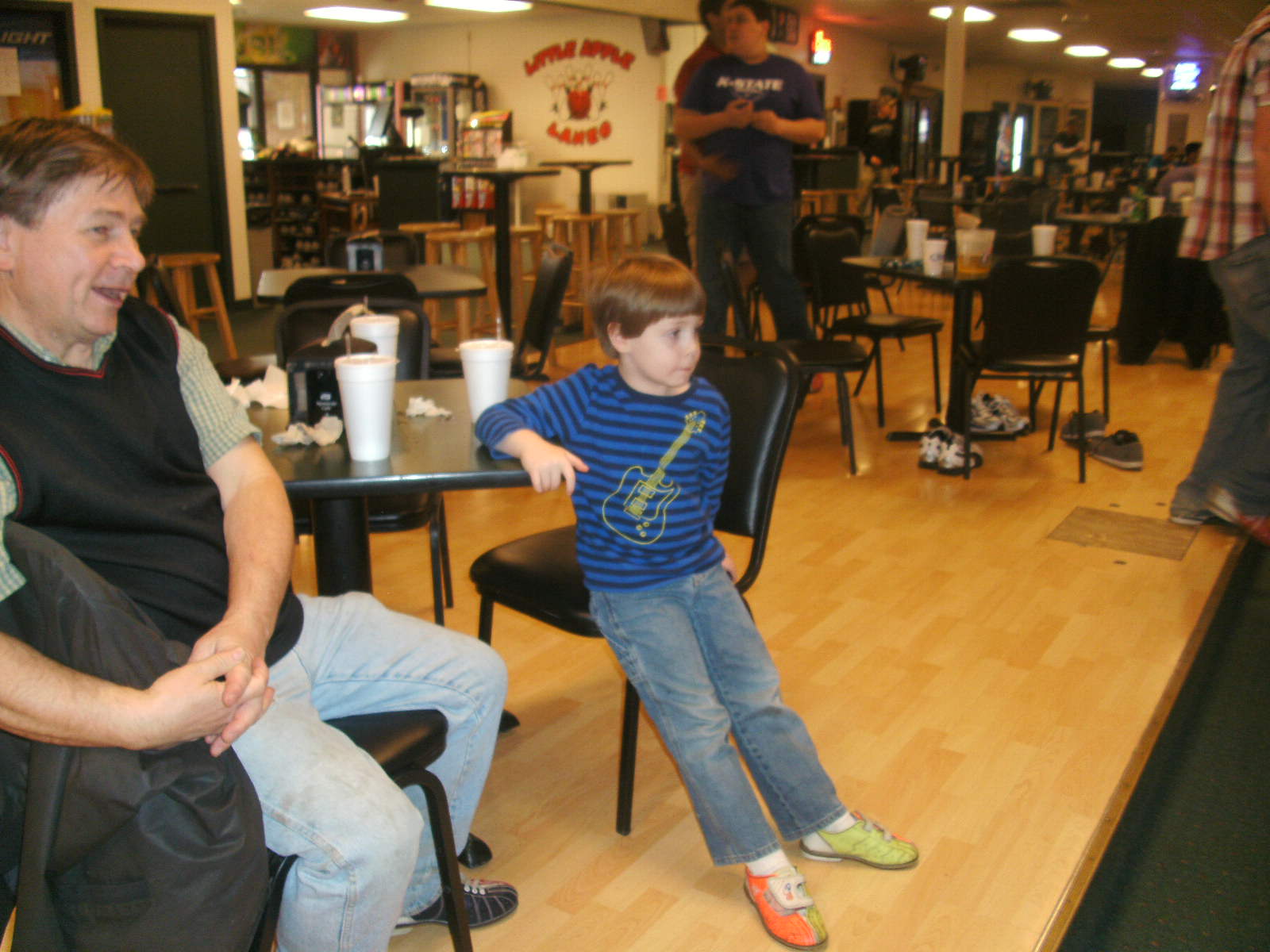
Bowling Boys
C. Hedge: Last week, I handed my grandson one of those “Buy One Get One Free” coupon cards. I told him he could pick whatever he wanted. With great joy, He decided “Bowling!” His glee is hereditary, directly passed on from my mother, Mary. Nothing…well almost nothing could stop her from bowling in her youth. (Lately, she prefers golf.) Here’s a favorite family story of my father’s, Joseph Hedge, about a fateful event. It took place during our year in Lousiana in 1965 (The inspiration for my almost finished novel, Crossing Deep River.)
1965 by Joseph Hedge
We rented a fine home in Fort Jessup….The trip to town was about three miles over sometimes passable roads. It was, I guess, the nature of the highway department to keep you in the dark as to what part of the road would be torn up today, or even this evening.
It was highly possible that the side of the road you took coming home last night was the side you took back the next morning. They kept compacting the road, moving the dirt from side to side. BJ went to school one morning in the VW and when he came home on the same side he used going to school, he turned a corner and high sided the vehicle. Being a far-sighted group, the highway department had a grader on hand to pull vehicles off of the piles they created. No cost, just consideration.
The road continued on to Natchitoches where both Mary and I belonged to bowling teams. To say the least, I bowled and Mary BOWLED. One evening it was her night to bowl and we were sure that the road to our bowling alley would be fixed. So we started off right after I came from work. I was dressed in a nice suit, shirt, and tie, shined shoes, combed hair. It was 15 miles to the town, but the farther we traveled, the worse the road became, with no place to get off.
We were on a commit. I knew that we could work out of this murky mess.
We came to a dip in the road and we made it to the bottom of the dip. Mired in about a foot of mud, we were stopped. I put the car in reverse. It said no. I put the car in forward. It said no. I told Mary to get out and push. She said no.
Well, it was time for the hero of the family to get out and survey the situation. Before getting out, I removed my shoes and socks. Rolled up my pants to the knees, and stepped out. No–I didn’t remove my coat. I was still well dressed, from my knees to my hair.
Mary got behind the wheel, started rocking the car. It went nowhere. I stood outside the driver’s door, told her I would push on the door jamb and ,“Maybe we can get out of the goo. “
She raced the car, let out the clutch, I pushed, and the back wheel threw up blotches of mud to cover me in the glory of Louisiana. I now matched my muddy feet —from head to toe.
We determined that it was time for me to go to a farm house we saw about two blocks back on the road. I started plodding my way. We had made ruts in the road and I was having trouble walking in them. I made it to the farm house—nice cozy place, white picket fence, lights shining from the front room, people relaxing watching television, maybe even eating ice cream.
I opened the gate, and I guess this was key to a big German Shepherd coming to meet me. I wasn’t sure if he was coming to meet me or eat me. No, none of this!! He was so happy to see me! He jumped and put his paws on my chest. I think he smiled.—I’m not sure.
The farmer came out and asked if I was having a problem. Of course, I felt there was no need for an explanation. I looked like a very well dressed fool. He looked and saw our problem and went to his barn. He came out with a farm tractor and attached a chain to my rear bumper. Mary was still in the car, ready to do whatever was necessary when and if the car was going to be moved.
I didn’t want the farmer to have to do all of the work, so I placed myself conveniently in the front of our car to help push.
The farmer took the slack out of his chain and hollered to Mary, “You ready?”
“Yes!”
Was I ready? Yes!! But he didn’t need to know that. He started pulling and I helping, started pushing and pushing. And pushing. The car began to move. It did. I didn’t.
The car left me and I did a belly flop in the mud. I was beyond comment, thanked the farmer, paid him ten dollars, and he pointed our way out to another road.
At this point I am driving. We hit the chosen road, and Mary said, “If we continue on we could make it for the second game.”
(Of course, Dad just turned toward home, Mom, then eventually both of them, giggling the rest of the way. I’ll never forget them driving up and hearing Mom calling us to all come outside. There was Daddy, looking like the creature from the Mud Lagoon. Thank goodness, he was laughing and soon enjoyed a warm bath.
Mom and Dad’s backyard is still decorated with bowling trophies.)
Posted in Family, Humor, Nostalgia, Slice of life
Tagged bad road adventures, bowling, Fort Jessup, Joseph Hedge, Louisiana, Mary Hedge
2 Comments
TAKING A LITTLE BREAK AT THE FICTION HOUSE
by Raji Singh (editor, Fiction House Publishing)
Our Founder, James Thaddeus ‘Blackjack’ Fiction
‘Tell our stories, Raji. If you don’t, it will be as if we’ll never have lived.’
These whispering cries of joy and sorrow rise from the bookshelves and portraits in the Fiction House.
I cannot refuse.
“…he died at age 52,” reports the network anchor, breaking the news of the death of….“A successful business person, he was known to proudly brag of working 16 hours a day, usually 6 to 7 days a week. Doctors report he died of sudden…
“Associates say ‘he worked himself to death’. It’s reported his personal net worth exceeds one billion dollars.”
“Jack died what he loved doing most,” says his widow as her face comes on the screen briefly. “Making money.”
***
“I believe she was smiling just a little, when she said that, don’t you, Raji” Tenille says playfully, as she comes from the kitchen and turns off the tv. “’He worked himself to death.’ They never say, ‘He took-it-easy’d himself to death,’ hmm Raji.”
I smile. “I knew him.”
“Oh, I’m sorry.”
“Not well. But enough to know he never took a break from the money chase. He was always pestering me, trying to buy one of my businesses. Just so he could turn around and sell it. I overheard a conversation at a restaurant between him and his wife. She kept telling him, ‘Slow down, Jack.’ He was on the phone through their entire meal. He obviously didn’t hear her.”
Tenille sits beside me on the couch, brushes her fingers across my cheek, and kisses my mouth. “I’m glad you’re not like that anymore, Raji.”
“Well, I was never quite like Jack. Still, you and the children changed me.”
Tenille’s josh is something I agree with wholeheartedly. It’s a sentiment I’m certain most, maybe all my ancestors here at the Fiction House practiced.
“Fortunately, it does not appear, mine sweet druzhyna husbant Raji, you will be featured in a news story like that anytime soon, eh?” Tenille is mimicking, kindly, my Russian immigrant great grandmother, Shelva Fiction. Tenille knew her very well. (I wish I had known g – gra’ma Shelva. I didn’t, growing up so far away from her.)
Shelva was always involved, fully, with life every moment of her over 100 years. Her thousands of stories, many of which we’ve been publishing at Fiction House, certainly prove it.
Tenille imitates in a loving way the transitory odd little Muscovite sayings Shelva incorporated into her ‘Amerika talk’.
“I learn English; Russian steppes by steppes. The consonants of North and South Amerika, they are an ocean away from the consonants of Asia and Europe. That distance – it is good. Because, then there is no worry about the Czar’s Cossack butchers disemvoweling you.”
This is what Shelva’s ‘husbant’, her sweet druzhyna, said when George Bernard Shaw published Pygmalion. “My Fair Lady, Shelva. It wasn’t long before she was speaking English as well as Professor Higgins, and writing like Shaw in never-ending journals.
Shelva and Jack: I wonder if they had anything at all in common. Jack made money, and at age 52 that money made his widow smile, slightly. Shelva at over double that age was still traveling, still helping raise children, still helping fellow Muscovites to freedom, still writing of past, present and yet to come experiences that thousands would come to read. So many ‘stills’ for Shelva. She was always smiling.
I don’t think, of all the times I saw Jack, I ever saw him smile.
©2013 Raji Singh
(Join me every Sunday night at the Fiction House, your place for short story, lark, whimsy, and merriment. Read more about Shelva and meet the many residents as I archive their lives and centuries of adventures. You can read their origins in my novel TALES OF THE FICTION HOUSE, but that’s a different story. It’s available at Amazon, and Barnes and Noble.)
Goblins In Your Desk Drawer?
Writers beware. Word and sentence gobbling goblins may live in your desk drawer.
Writers, be prepared: You with manuscripts years, or maybe decades old are most at risk! They don’t seem to attack recent works. You may find your old masterpieces decimated, as much so as if you wrote them on oak blocks and ravenous termites discovered them.
The goblins perform quite thorough jobs of editing. Your book, short story, screenplay may be as unrecognizable, as if studio hacks were charged with re-writes via committee.
I discovered this fact, when deciding to dust off and review my ‘TRUE MASTERPIECE’ of a few years back. Multiple agents and editors didn’t recognize the genius storyline, character developments, plot twists, and overall grandeur of the work at the time I queried them. So I’d put it aside.
‘Strange,’ I thought removing my paper copy from its dusty wrapping to re-familiarize myself. ‘What’s this? This word wasn’t misspelled way back when. Hey, this sentence doesn’t make any sense.’
What’s up? I knew exactly what I meant to say, and I said it, when I wrote this.
Something’s wrong! Page after page I, first peruse, and then intently study. Words are missing, participles dangling, adjectives inconsistently jangling, images incoherently tangling.
What’s this? Even my main character changing his name, eye color, even sex, and then chameleon-like becoming who he was in time for the BIG denouement.
There is only one explanation: Those hobbling, gobbling goblins of time. My masterpiece – reduced to gnarled waste paper: All because those tiny-vision agents and editors couldn’t see the grand scale of my work. If not for them, my work would be on bookshelves throughout the literate world, there for Humankind to learn from, and, help bring peace and harmony to all. Published and safely ensconced and shining on bookshelves, my masterwork would have been safe from the dusty desk drawer goblins of time.
C’ est la vie.
I’ll go through the book again. And again. The world is waiting.
Maybe, a good lesson to other writers? Put your writing aside for a few weeks, not more than a few months, if even that, but most certainly, not a few years. A SHORT interval of time will give you a fresh, clear perspective on it.
Never, ever put it aside for years, or you too may start believing in goblins.
I bid adieu wishing you happy writing, and as importantly, happy meticulous rewriting.
(Enjoy Raji Singh’s new whimsical slice of life tales and vignettes – free for all- every Sunday night at Tales of the Fiction House.com You can buy his novel, Tales of the Fiction House- a completely different story- at Amazon, Barnes and Noble, and soon in print edition. )
©Raji Singh 2013
The Trauma of Trilogies
 When I first made the jump from short stories to a novel, I used to say that if the raw excitement of getting swept up in a short story could be compared to starting an affair, writing a novel was marriage with ten kids. By that measure what I’m doing now feels like marriage, ten kids, and omigod I’m raising the grandchildren.
I’m on book number three of an unanticipated trilogy and can only say that plotting the third book of a series is like starting a marathon with two backpacks strapped to your back. They’re heavy as hell, and about forty yards down the road they start slipping. Stuff starts spilling out. It’s lighter now! — you think. Much better! But no, this isn’t right. I can’t dump this story line; the first two books won’t make any sense if I do. I have to find a place for that character; I developed her in the last book and she’s, well, there.
This all came about because I wrote book number one to stand alone. At the time it seemed my first book (The Light Bearer) had wound down to a natural end. I was eager move on and start rooting around in fresh nooks and crannies of history. But then later I changed my mind. Even though it felt cruel to rip open that package where my characters were languishing in their reasonably happy ending and fling them out into the mean world again — and at first it put me into a sour and nihilistic funk just thinking about it — I had to do it. I’d begun to be haunted by thoughts of my characters’ future lives. On top of it, I missed those guys and just wanted to be with them again. But these days I’ve come to believe the best way to handle this trilogy business is to write all three volumes through at least once, even if it’s just a sketchy draft toward the end.
I’m discovering there’s a lot of water under the bridge by book number three. A Hoover Dam’s worth. All the characters have extensive histories with each other. The trickiest part of plotting, now, is concocting ways to bring forward information from the previous two books while making this material seem necessary to understanding the conflict in the present. I’ve lost the right to pick a scene just because I think it puts my characters under the right kind of pressure, accomplishes what it needs to with economy, and deepens the characters. I have to pick a scene because it’s all those things — and brings forward the maximum amount of information from the previous books. And does so dramatically, not statically. Another noisome part of all this is having to hunt down all those pesky details from two books ago that I’ve simply forgotten about. Did I use the ancient or modern spelling of the name of that river? What motivated that character? — hell if I remember. And god forbid I slip up and resuscitate someone who died. I have to steel myself to go back and look things up — and who jumps for joy at the thought of mucking around in their old prose? I’ve heard some writers actually pay someone else to do this and I can understand why.
To stop myself from whining I remind myself of the perks. Pre-assembled characters. Pre-crafted world. Pre-molded main story line. And as for research — if you don’t already have it in your head, by now you know right where to look. And I tell myself that somehow, it will all work out.
When I first decided Light Bearer would be a trilogy, Leonard Bishop was still around and I got a chance to ask him if he had any advice to give about unplanned sequels. He said to write each book so that it wouldn’t matter much if you never got around to writing the next one. But lately I’ve been hotly debating this advice in my head, since the cliffhanger ending of book number two has already pretty much made hash out of it. Part of me wishes I could just open with a note to a reader: Sorry, I know it’s a huge hassle but you really kind of have to have read the first two before you start this one….
By now, so many past conflicts have had to be brought forward that spillage is happening — one book can’t contain them all. I’m deciding that some open ends will have to remain open ended, some open questions will never be answered. Number Three is losing its single-novel tidiness, slopping over its boundaries, letting in the chaos of life, developing so many story-rivulets dribbling out in all directions, I feel they’ll never come together in one river again. But hopefully, I tell myself, while it’s losing tidiness it’s gaining something else. Somehow this wild, unmanicured book I’m working on now seems to be more in harmony with how life actually unfolds. For one thing, there are no ‘reasonably happy endings’ — what was I thinking? How can there be, when nothing ever really ends?


 Pen In Hand